Every email you send ends with a closing. That one small phrase before your name shapes how the reader feels about your entire message. If you have been ending every email with “Sincerely” for years, you might be leaving a lot of impression-building potential on the table.
“Sincerely” is not a bad word. It is professional, polished, and perfectly appropriate. But it is also predictable. When thousands of people use the same sign-off every day, it stops meaning anything at all. Choosing the right closing for the right context shows social intelligence, communication skill, and genuine attention to your reader.
This guide gives you 30 tested, real-world email closings to use instead of “Sincerely,” complete with tone notes and example uses, so you always know exactly which one fits the moment.
What Does “Sincerely” Mean?
“Sincerely” is a formal valediction, which is the closing phrase in a letter or email. It comes from the Latin word sincerus, meaning pure, whole, or genuine. When you write “Sincerely,” you are telling the reader that your message is honest and that you mean everything you wrote.
It became a standard closing in business correspondence during the 19th and 20th centuries. Today, it remains one of the most recognized sign-offs in the English language, used across professional emails, job applications, formal business letters, and official correspondence worldwide.
Is It Professional/Polite to Say “Sincerely”?
Yes, “Sincerely” is both professional and polite. It works in business emails, cover letters, complaint letters, and any formal communication where you want to maintain a respectful tone.
That said, it is best suited for situations where you do not know the recipient personally or when the email calls for a strictly formal register. Using it with close colleagues or in casual workplace settings can sometimes feel stiff or unnecessarily rigid. In those moments, a warmer alternative communicates more naturally.
Pros and Cons of Using “Sincerely”
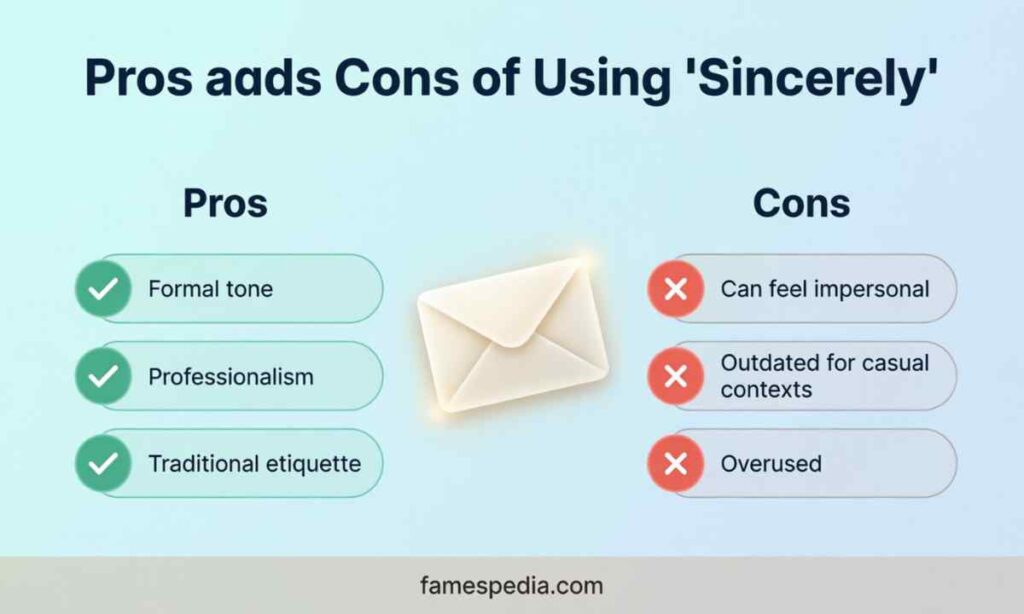
Pros
- Universally recognized and accepted in professional settings
- Works across cultures and industries without risk of misinterpretation
- Carries a tone of honesty and respect
- Safe choice for first-time correspondence, job applications, and formal requests
- Requires no second-guessing about appropriateness
Cons
- Overused to the point of feeling generic and impersonal
- Can sound stiff when writing to colleagues you know well
- Does not reflect warmth, creativity, or personality
- Feels outdated in fast-paced modern workplaces and digital communication
- Misses the opportunity to reinforce your relationship with the reader
Synonyms For “Sincerely”
Before jumping into the full list, here is a quick reference of the most commonly used synonyms grouped by formality level:
| Formality Level | Best Options |
| Highly Formal | Yours faithfully, Respectfully, Yours respectfully |
| Formal | Best regards, Kind regards, Yours truly, Regards |
| Semi-Formal | Warm regards, With appreciation, Cordially, With gratitude |
| Friendly Professional | All the best, Best wishes, Warmly, Cheers |
| Warm and Personal | Take care, With kind thoughts, Yours warmly, Gratefully |
Alternative Ways to Say “Sincerely”
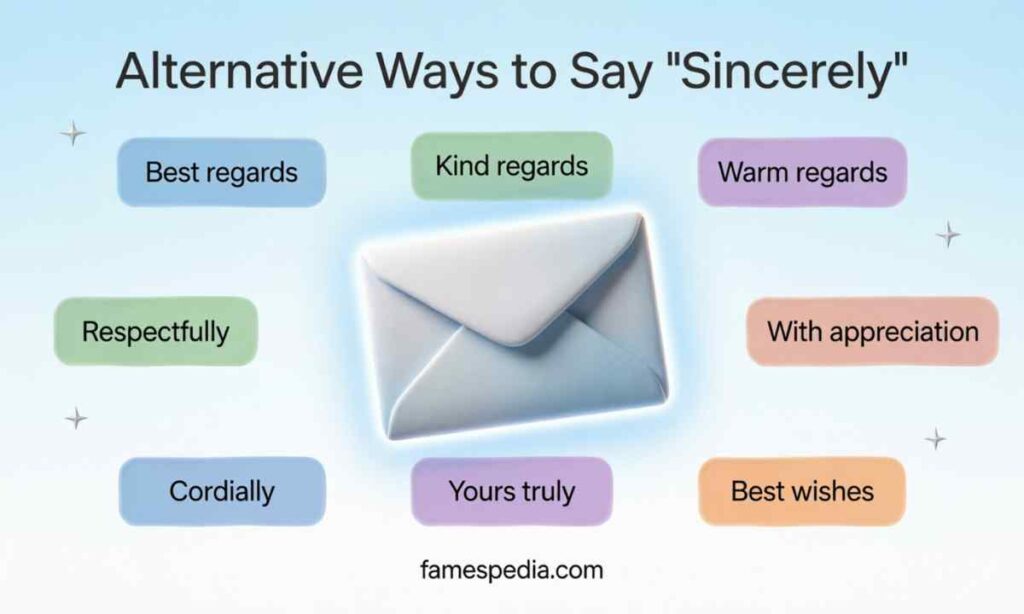
Best Regards
“Best regards” is the most widely used alternative to “Sincerely” in 2026. It strikes a perfect balance between formality and warmth, making it appropriate for almost any professional context. Use it when writing to clients, managers, new contacts, or anyone you want to sound polished with.
Example: “Please find the attached report for your review. Best regards, Sarah Collins”
Tone: Professional, warm, versatile
Warm Regards
“Warm regards” adds a layer of genuine care to your closing without crossing into casual territory. It works particularly well when you have an ongoing relationship with the recipient and want to acknowledge it without sounding overly formal.
Example: “It was great speaking with you today. Warm regards, David Kim”
Tone: Friendly, professional, relationship-forward
Kind Regards
“Kind regards” lands somewhere between “Best regards” and “Warm regards.” It is slightly softer than “Best regards” and works well in emails where you want to sound approachable and professional at the same time.
Example: “Thank you for your prompt response. Kind regards, Emma Clarke”
Tone: Polite, professional, approachable
Yours Truly
“Yours truly” is a classic closing with a slightly more personal feel than “Sincerely.” It is commonly used in formal letters and emails to people you have not met in person. Traditionally, it was reserved for correspondence that began with “Dear Sir” or “Dear Madam,” though this distinction is less strictly observed in modern American English.
Example: “I look forward to your feedback on the proposal. Yours truly, James Burton”
Tone: Formal, classic, slightly personal
Yours Faithfully
“Yours faithfully” is the most traditional British English closing. It is used in very formal correspondence, typically when you do not know the recipient’s name and have addressed them as “Dear Sir” or “Dear Madam.” It conveys deep respect and strong professional deference.
Example: “I am writing to formally request an extension on the deadline. Yours faithfully, Rachel Moore”
Tone: Very formal, respectful, traditional British
Regards
“Regards” on its own is clean, efficient, and universally appropriate. It is slightly more neutral than “Best regards” and works well in quick professional exchanges, follow-up emails, and internal communications where you want to sound professional without being wordy.
Example: “Please let me know if you need anything else. Regards, Tom Andrews”
Tone: Neutral, professional, concise
With Appreciation

“With appreciation” is a thoughtful closing for emails where someone has helped you, provided feedback, shared information, or gone out of their way for you. It signals genuine gratitude without overdoing it.
Example: “Thank you for walking me through the process. With appreciation, Nina Patel”
Tone: Grateful, professional, sincere
Respectfully
“Respectfully” carries the highest level of formal deference and is best used when writing to someone in a senior hierarchical position, such as a government official, executive, or academic. It is firm, professional, and clearly signals acknowledgment of authority.
Example: “I would appreciate your guidance on this matter. Respectfully, Michael Chan”
Tone: Highly formal, deferential, structured
Yours Respectfully
“Yours respectfully” is a slightly more personal version of “Respectfully.” It adds the possessive “yours,” which creates a small sense of connection while maintaining full formality. Use it in formal letters and official correspondence.
Example: “I remain committed to delivering quality work on this project. Yours respectfully, Angela Ross”
Tone: Formal, respectful, classic
Cordially
“Cordially” is a warm and elegant closing that works well in professional emails where you want to sound genuinely friendly without crossing into casual territory. It is particularly effective in client-facing communication and formal invitations.
Example: “We look forward to welcoming you to our event. Cordially, The Events Team”
Tone: Warm, formal, polished
With Gratitude
“With gratitude” is a strong, clear expression of thanks. Use it in emails where the reader has done something meaningful for you, whether that is sharing expertise, offering a referral, or simply taking the time to respond thoughtfully.
Example: “Your input on this project has been invaluable. With gratitude, Priya Sharma”
Tone: Grateful, professional, heartfelt
Many Thanks
“Many thanks” is a brief, friendly sign-off that expresses appreciation without formality. It is perfect for semi-formal workplace emails, quick requests, and messages to colleagues you work with regularly.
Example: “Could you send that file over when you get a chance? Many thanks, Ben Walsh”
Tone: Friendly, appreciative, casual-professional
With Respect
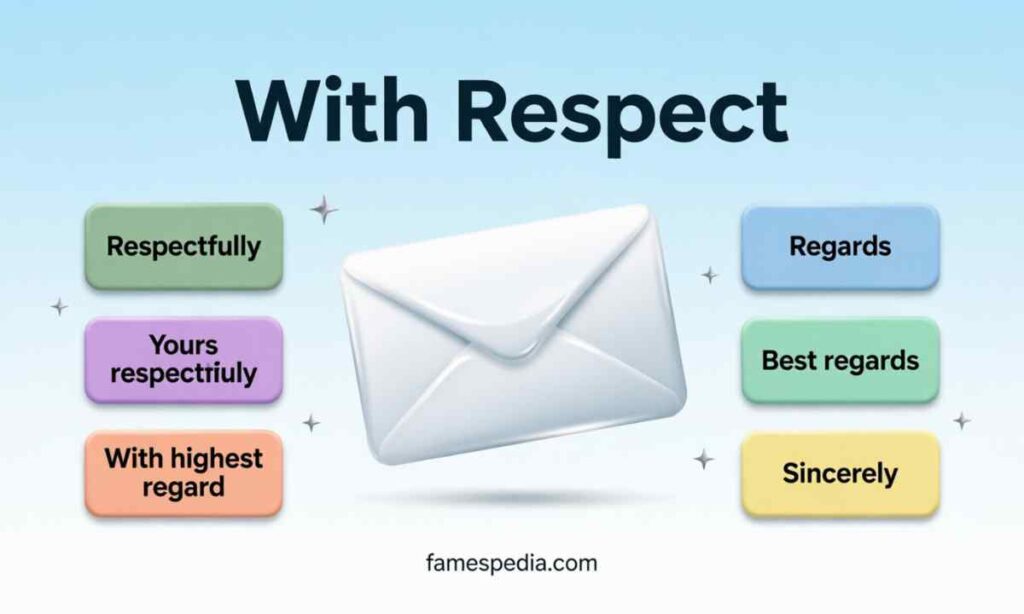
“With respect” is a measured, dignified closing that works in situations where you want to acknowledge the recipient’s standing without being overly deferential. It fits well in formal business correspondence and professional negotiations.
Example: “I value your perspective on this matter. With respect, Laura Jennings”
Tone: Courteous, formal, professional
Truly Yours
“Truly yours” is a warmer version of “Yours truly.” It feels more personal and heartfelt, making it a good choice for emails where you want to maintain professionalism while expressing genuine care for the reader.
Example: “I am always happy to help whenever you need it. Truly yours, Omar Hassan”
Tone: Warm, sincere, professional
Yours Sincerely
“Yours sincerely” is the formal British English equivalent of the American “Sincerely.” It is the standard closing when you know the recipient’s name and have addressed them as “Dear Mr. Smith” or “Dear Dr. Jones.” It is professional, reliable, and widely respected.
Example: “I look forward to hearing your thoughts. Yours sincerely, Claire Bennett”
Tone: Formal, standard, professional
Cheers
“Cheers” is widely used in British and Australian professional culture and has grown in popularity in informal U.S. business settings. It is energetic, friendly, and works best in internal emails, quick exchanges, and messages to colleagues you have a comfortable rapport with.
Example: “Let me know if the time works for you. Cheers, Liam Foster”
Tone: Casual, friendly, upbeat
All the Best
“All the best” is a warm, positive closing that works across a wide range of professional and semi-personal emails. It expresses goodwill toward the reader and fits naturally in emails that end on an upbeat or encouraging note.
Example: “Good luck with the presentation tomorrow. All the best, Mia Turner”
Tone: Warm, positive, versatile
Best Wishes
“Best wishes” is similar to “All the best” but carries a slightly more formal edge. It is appropriate for both professional and personal emails and works particularly well in emails marking a milestone, transition, or celebratory occasion.
Example: “Congratulations on the new role. Best wishes, Samuel Lee”
Tone: Warm, professional, celebratory
Warmly
“Warmly” is a single-word closing that conveys genuine care without overexplaining it. It is one of the best options for building stronger relationships with long-term clients or colleagues, adding a human touch to your digital communication.
Example: “I am always here if you want to talk through the details. Warmly, Jessica Ford”
Tone: Personal, caring, professional
Yours Warmly
“Yours warmly” expands on “Warmly” by adding the personal possessive. It is ideal for relationships where you want to express that you genuinely value the connection, not just the professional exchange.
Example: “It has been a pleasure working with you on this. Yours warmly, Daniel Cruz”
Tone: Personal, sincere, relationship-focused
With Best Regards
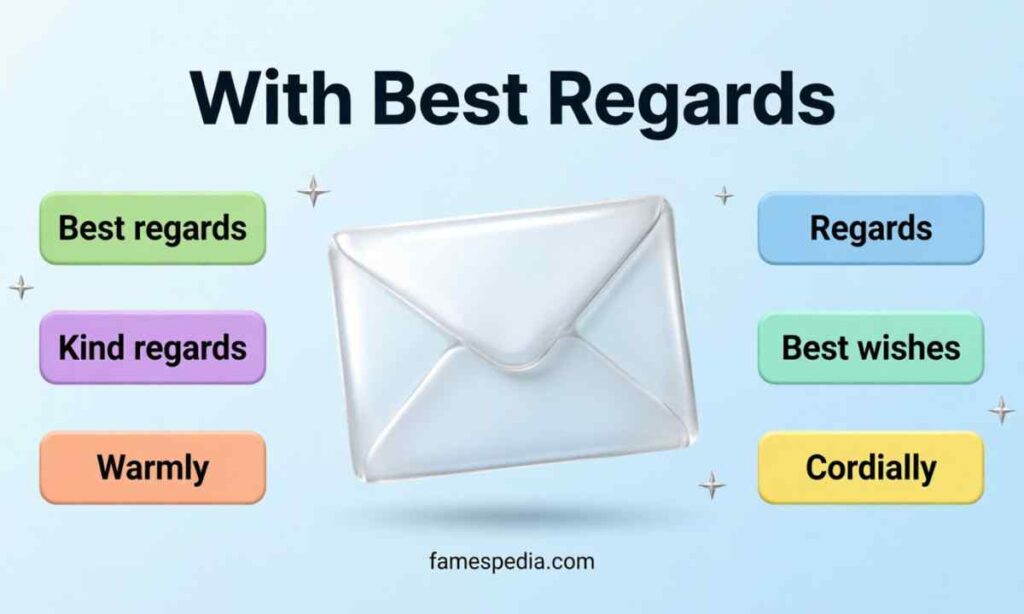
“With best regards” is a slightly more formal and emphatic version of “Best regards.” Adding “with” makes it feel a touch more intentional, which can be useful in emails where you want to make an extra positive impression.
Example: “Thank you for considering my application. With best regards, Hannah Brooks”
Tone: Formal, polished, professional
Faithfully Yours
“Faithfully yours” is the American counterpart to the British “Yours faithfully.” It signals complete respect and commitment, making it suitable for highly formal correspondence where protocol matters.
Example: “I remain dedicated to serving your organization’s interests. Faithfully yours, Robert Marsh”
Tone: Very formal, traditional, respectful
With Heartfelt Regards
“With heartfelt regards” is a deeply expressive closing for emails that carry emotional weight, such as condolences, expressions of gratitude after significant support, or messages to mentors and long-term colleagues.
Example: “Your guidance through this process has meant more than I can say. With heartfelt regards, Sophie Adams”
Tone: Emotional, sincere, formal
In Appreciation
“In appreciation” is a clean, direct expression of thanks. It is slightly more formal than “With appreciation” and works well in structured professional contexts such as thank-you emails following interviews or mentorship.
Example: “Thank you for your time and expertise. In appreciation, Kevin Yuen”
Tone: Grateful, formal, professional
Gratefully
“Gratefully” is a single-word closing that packs a lot of warmth into very few letters. It is ideal when you want your thanks to feel genuine and direct, particularly in follow-up emails or messages responding to a favor.
Example: “I appreciate you going out of your way to help me with this. Gratefully, Chloe Martin”
Tone: Warm, thankful, sincere
With Best Wishes
“With best wishes” adds “with” to “Best wishes,” giving it a slightly softer and more personal quality. Use it for emails to people you know personally but still interact with in a professional capacity.
Example: “I hope the project goes exactly as planned. With best wishes, Aaron Singh”
Tone: Warm, personal, semi-formal
Yours in Appreciation
“Yours in appreciation” is a more formal and structured expression of gratitude. It is particularly fitting for nonprofit correspondence, formal thank-you letters, and emails following a significant act of generosity or support.
Example: “Thank you for your generous contribution to our initiative. Yours in appreciation, The Fundraising Team”
Tone: Appreciative, formal, structured
Take Care
“Take care” is a friendly, caring sign-off that works well in casual professional emails and messages to people you have a genuine personal connection with. It shows thoughtfulness and signals that you value the person beyond the business relationship.
Example: “Talk soon, and I hope the move goes smoothly. Take care, Maria Lopez”
Tone: Casual, caring, warm
With Kind Thoughts
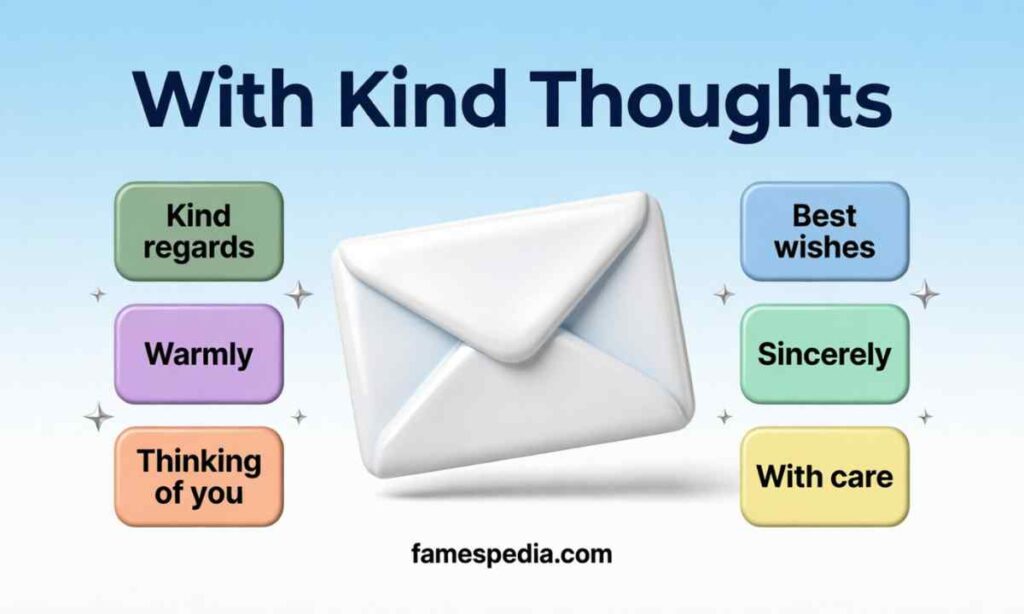
“With kind thoughts” is a gentle, empathetic closing for emails dealing with sensitive or personal subject matter. It communicates compassion and works well in supportive messages, wellness-related communications, or follow-ups after difficult conversations.
Example: “I hope things are feeling a little easier for you this week. With kind thoughts, Rebecca Flynn”
Tone: Empathetic, warm, thoughtful
With Best Intentions
“With best intentions” is a transparent and sincere closing that works in emails where you want to make your goodwill toward the reader completely clear. It is particularly useful when navigating a disagreement, making a difficult request, or delivering challenging feedback.
Example: “I share this feedback because I genuinely want to see this project succeed. With best intentions, Chris Morgan”
Tone: Sincere, transparent, thoughtful
You May Also Like This: Kinesthesiology vs Kinesiology: Meaning And Differences
Conclusion
The way you close an email is the last thing your reader sees, which makes it one of the most important words you write. “Sincerely” has served its purpose for decades, but 2026 professional communication rewards authenticity, tone awareness, and relationship intelligence.
The 30 alternatives in this guide cover every situation you will face, from highly formal government correspondence to a warm check-in with a long-term colleague. Match your closing to your tone, your relationship with the reader, and the purpose of your message, and you will always leave a strong, lasting impression.
When in doubt, “Best regards” remains the safest universal choice. But when you know your reader and the context, reaching for something more specific shows exactly the kind of communication skill that builds real professional relationships.

Arslan is the creator and author behind FamesPedia, a platform focused on grammar, writing skills, and English language learning. Passionate about clear communication and effective writing, Arslan shares practical grammar tips, easy-to-follow language guides, and educational content to help readers improve their English with confidence.