If you have ever paused mid-sentence wondering whether to write “cacoon” or “cocoon,” you are not alone. This is one of the most common spelling mix-ups in the English language. The two words sound almost identical when spoken out loud, which makes it genuinely tricky for writers, students, and even seasoned professionals to get right.
So which one is correct? The short answer is: cocoon is the correct spelling in almost every context. But the full story is a bit more interesting. “Cacoon” is not entirely a made-up word either. It has a legitimate use in the world of botany, which adds a surprising twist to this spelling debate.
This guide breaks it all down clearly, covering the correct spelling, the science behind cocoons, the botanical identity of cacoon, and some foolproof memory tricks to help you never mix them up again.
The Root of Confusion: Why Do People Mix Up Cacoon and Cocoon?
Several factors work together to create this spelling confusion, and understanding them makes it much easier to move past the mistake for good.
Phonetic similarity is the biggest culprit. Both words are pronounced /kəˈkuːn/, which sounds like “kuh-KOON.” When you hear the word spoken, there is no way to know whether the first vowel is an “a” or an “o.” English spelling often does not follow pronunciation rules (think “knight” or “colonel”), so sound alone cannot guide you here.
Pattern interference also plays a role. English is full of double-O words where the spelling is unpredictable. Words like “balloon,” “raccoon,” and “spoon” all follow similar sound patterns, but their spellings vary. This inconsistency makes writers hesitant and prone to errors.
Typing errors and autocorrect compound the problem. The letter “a” sits close to “o” on a standard keyboard, making it easy to hit the wrong key while typing quickly. Some autocorrect systems also fail to flag “cacoon” as incorrect, allowing the misspelling to slip through undetected.
Digital propagation has given the misspelling a longer life online. Once a mistake appears in social media posts, product listings, or blog articles, it spreads rapidly. Some brands have even adopted “Cacoon” deliberately as a stylized name, which only deepens the confusion for everyday readers.
Cocoon: The Correct Spelling and Its Rich Meanings
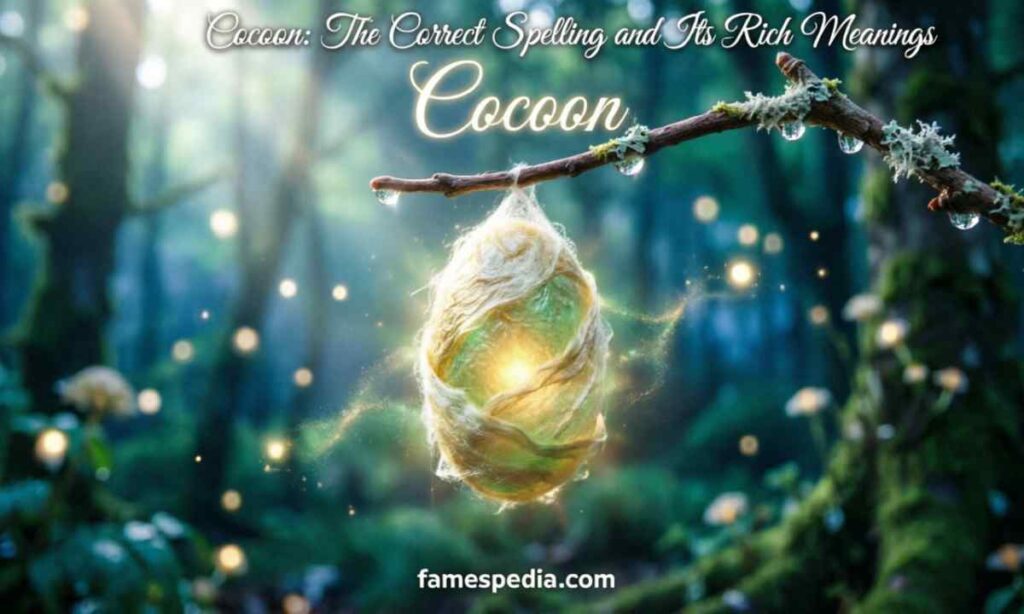
Cocoon is the standard spelling recognized by every major English dictionary, including Merriam-Webster and the Oxford English Dictionary. The word traces its roots to the French word cocon, which itself comes from the Latin coccum, meaning shell or berry. It entered English in the 17th century and has since expanded well beyond its original scientific meaning.
Cocoon Definition in Entomology
In entomology, the scientific study of insects, a cocoon is a protective casing that certain insect larvae spin around themselves before entering the pupal stage. This structure allows the insect to undergo metamorphosis safely, shielded from predators, weather, and physical damage.
Not all insects produce cocoons. Moths and silkworms are the most well-known producers. Butterflies, by contrast, form a chrysalis, which is a hardened outer shell formed from the insect’s own skin rather than spun silk threads. This is an important distinction that often gets overlooked.
The Science Behind Cocoon Formation
The process of cocoon formation is one of nature’s most precise engineering feats. When a caterpillar or moth larva is ready to enter the pupal stage, it begins spinning silk threads produced by silk glands located near its mouth. A single silkworm (Bombyx mori) can produce a continuous silk thread up to 1,000 meters long in a single session.
The larva moves its head in a figure-eight pattern, layering threads over itself in a non-woven structure with multiple parallel layers. These layers create a system that is lightweight, breathable, thermally insulating, and mechanically strong all at the same time.
Inside the cocoon, the pupa undergoes complete biological transformation. Organs dissolve and rebuild. Wings, antennae, and adult body structures form from scratch. The cocoon wall acts as a climate regulator, maintaining temperature and humidity at levels that support this delicate process.
Cocoon in Metaphorical Context
Beyond biology, “cocoon” has become one of the most expressive metaphors in the English language. It describes any state of safety, comfort, isolation, or personal transformation.
Common metaphorical uses include:
- “She cocooned herself in blankets after a difficult week.”
- “The small town felt like a cocoon, sheltered from the outside world.”
- “His time abroad became a cocoon of self-discovery.”
In psychology and lifestyle writing, “cocooning” refers to the tendency to withdraw from social settings and create a private, comforting home environment. This became especially popular as a cultural concept in the late 20th century and resurged strongly during periods of social disruption.
Cocoon in Popular Culture
The word “cocoon” carries significant weight in film, literature, and art. The 1985 science fiction film Cocoon used the concept as a central metaphor for rejuvenation and transformation. In literature, the cocoon appears repeatedly as a symbol of potential, dormancy, and rebirth.
In wellness and interior design, the “cocoon aesthetic” describes spaces built around softness, enclosure, and warmth. Curved sofas, layered textiles, low lighting, and rounded architecture all contribute to what designers call the cocoon effect.
Cocoon in Technology and Design
Modern engineers and scientists have drawn deep inspiration from cocoon structures. Silkworm cocoons bring inspiration for people to design and fabricate advanced biomimetic materials, with their highly porous non-woven structure offering unique mechanical properties.
Researchers at MIT’s Mediated Matter Group created the Silk Pavilion, a structure inspired by the silkworm’s ability to generate a 3D cocoon out of a single multi-property silk thread measuring 1 km in length.
Silkworm cocoons have been found to provide a significant buffer against temperature changes, with wild cocoons showing stronger thermal damping than domestic types, making them highly relevant to the bio-inspired design of new thermo-regulating materials.
In medicine, researchers have developed 3D bioinspired scaffolds that mimic the fibrous structure and protective function of silkworm cocoons, enabling improved cell manufacturing and cryopreservation.
Cacoon: The Misspelling and Its Unexpected Twist
Here is where things get genuinely interesting. While “cacoon” is almost always a spelling mistake when someone means the insect’s silk casing, it is not a completely fictional word.
Cacoon as a Botanical Term
In botany, “cacoon” refers to the large, hard-shelled bean produced by the tropical climbing vine Fevillea cordifolia, commonly known as the snuffbox bean plant. This plant is native to tropical regions of Central America, South America, the Caribbean, and parts of Africa. It grows in warm, humid climates and produces distinctive round fruits with large, flat seeds inside.
The cacoon bean is notable for its size and durability. Its hard outer shell makes it a popular material for local crafts, with artisans in Caribbean communities carving intricate designs into the surface and using the beans to create jewelry and decorative objects.
Some sources also reference cacoon in the context of Entada rheedii, a tropical vine known regionally as the monkey ladder or sea heart plant. In Jamaica and other parts of the Caribbean, the dried seeds of this vine are associated with traditional herbal practices.
Traditional Medicinal Uses of Cacoon
Communities in tropical regions have used cacoon seeds in traditional medicine for generations. The seeds have been associated with digestive support, anti-inflammatory uses, and general wellness remedies in folk medicine traditions.
It is important to note that these uses are part of traditional healing practice and have not been fully validated through clinical trials. The cacoon vine plant remains a culturally significant botanical specimen in the regions where it grows naturally.
Comparison Table: Cocoon vs. Cacoon
| Feature | Cocoon | Cacoon |
| Correct spelling | Yes | Only in botanical context |
| Dictionary recognized | Yes (Merriam-Webster, Oxford) | Rarely, as a botanical term |
| Common meaning | Silk casing spun by insects | Bean from snuffbox plant |
| Scientific field | Entomology | Botany |
| Metaphorical use | Yes (comfort, transformation) | No |
| Found in nature | Moths, silkworms, other insects | Tropical climbing vines |
| Everyday usage | Very common | Extremely rare |
| Misspelling risk | Often misspelled as cacoon | Usually a mistake for cocoon |
The Impact of Misspelling: Why Correct Spelling Matters
Using “cacoon” when you mean “cocoon” creates more problems than most people realize, and the consequences stretch across several areas.
Academic and professional credibility takes a hit when spelling errors appear in written work. Readers and evaluators often associate careless spelling with a lack of attention to detail.
Search engine visibility suffers when articles or web pages use misspelled keywords. If someone searches “cocoon,” content using “cacoon” throughout may not rank as well or appear in the right search context.
Miscommunication in scientific contexts can be particularly serious. In an entomology paper or biology lesson, using “cacoon” instead of “cocoon” could cause genuine confusion, especially for students or non-native English speakers learning the correct terminology.
Language learning is also affected. When misspellings circulate widely online, they create false patterns for learners who are trying to build correct vocabulary through reading and exposure.
Fascinating Facts About Cocoons in Nature
Cocoons are far more remarkable than most people give them credit for. Here are some genuinely surprising facts:
- A single Bombyx mori silkworm can spin up to 1,000 meters of continuous silk thread to form its cocoon.
- Cocoons are not exclusive to moths. Fleas, beetles, and some species of flies also produce cocoon-like structures during metamorphosis.
- The silk used in cocoon formation is stronger than steel of the same diameter by weight.
- Some cocoons have a built-in valve mechanism that allows the adult insect to exit easily while still keeping predators out.
- Wild silkworm cocoons are stronger and thermally more efficient than domesticated varieties because wild insects face harsher environmental conditions.
- Certain wasp species actually parasitize caterpillars and then spin their own cocoons on or near the host, a behavior known as koinobiont parasitism.
The Evolutionary Significance of Cocoons
Cocoons did not appear overnight in evolutionary history. They represent millions of years of biological refinement. The ability to spin a protective case during the vulnerable pupal stage gave insects a massive survival advantage by shielding them from predators, temperature extremes, and physical damage.
Complete metamorphosis, the process that includes a pupal stage protected by a cocoon or chrysalis, is found in the most species-rich insect groups on Earth. Beetles, butterflies, moths, flies, and wasps all undergo this process. Scientists believe this evolutionary strategy allowed insects to occupy completely different ecological niches as larvae and adults, reducing competition within the same species for food and resources.
The cocoon essentially allowed one organism to live two very different lives, which turned out to be one of nature’s most successful survival strategies.
Tips for Remembering the Correct Spelling
These simple tricks will help you lock in the correct spelling permanently:
- The double-O rule: Cocoon has two O’s in the middle, just like the two loops of silk a larva spins around itself. Picture two round rings of thread.
- CO for comfort: Both “cocoon” and “cozy” start with “CO.” When in doubt, remember that a cocoon is a cozy shelter.
- Think of the moon: Cocoon rhymes with “moon,” and both are spelled with double-O. Moon, spoon, cocoon.
- Say it slowly: Break it into syllables: co-COON. Both syllables start with “co,” not “ca.”
- Picture silk threads: Imagine a silkworm spinning two O-shaped loops. That visual reinforces the double-O spelling every time.
Case Study: The Silk Industry and Cocoons
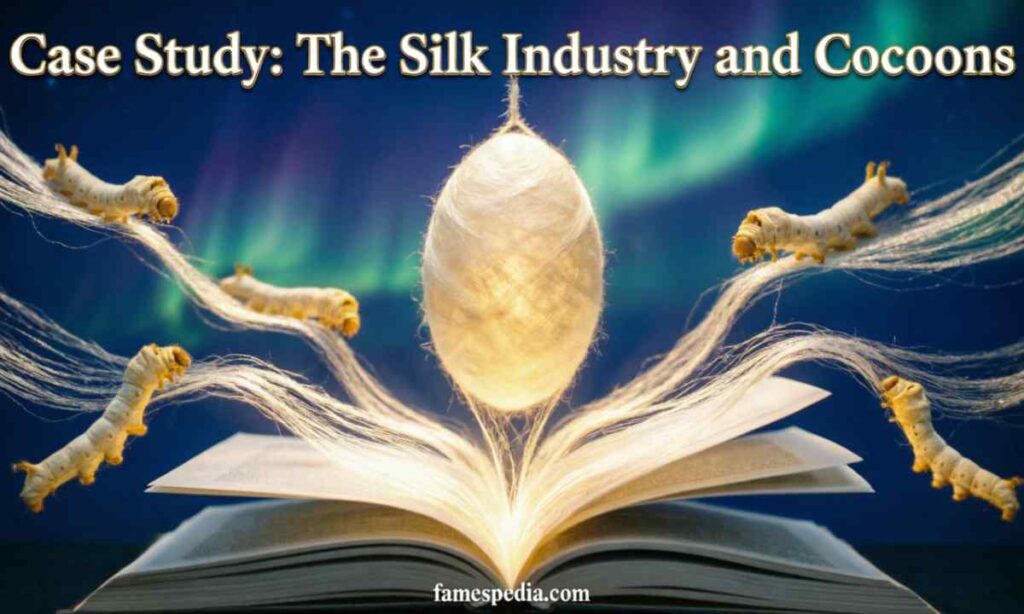
The silk industry is one of the oldest in the world, and cocoons sit at its foundation. The process of harvesting silk from cocoons, known as sericulture, dates back over 5,000 years to ancient China. For centuries, China maintained a monopoly on silk production by keeping the secrets of sericulture strictly guarded.
Today, China remains the world’s largest silk producer. Guangxi Province alone produced 437,100 tons of silkworm cocoons in 2022, accounting for over 59% of national cocoon output.
The process of silk extraction involves softening the cocoon in hot water to loosen the sericin protein that binds the threads, then carefully unwinding the silk filament from the outside in. A single cocoon yields hundreds of meters of usable thread.
Due to stringent quality requirements, only high-quality cocoons are selected for silk production, while defective ones have traditionally been relegated to low-value textile fillers or direct landfilling. Modern research is now exploring ways to repurpose these discarded cocoons through biomimetic 3D printing and advanced composite manufacturing.
The Future of Cocoon-Inspired Technology
The humble silkworm cocoon is quietly becoming one of the most studied structures in materials science and bioengineering. Researchers around the world are mining its properties for applications that would have seemed like science fiction not long ago.
In biomedical engineering, scientists are developing silk-based scaffolds that support tissue regeneration, wound healing, and even organ repair. Silk proteins are biocompatible, meaning the human body does not reject them, which makes them ideal for implantable medical devices.
In sustainable materials, combining continuous fiber 3D printing with traditional molding techniques and using discarded cocoons as raw materials creates high-performance composite materials that mimic the natural structure of silkworm cocoons, reducing dependence on traditional petrochemical plastics.
In architecture and design, the MIT Silk Pavilion demonstrated that cocoon-inspired construction methods could point toward entirely new ways of building lightweight, strong, and sustainable structures.
In protective gear, the multi-layer non-woven structure of cocoon walls has inspired the development of advanced impact-resistant materials used in helmets, body armor, and packaging.
The cocoon, at its core, is a masterclass in doing more with less. It is lightweight, breathable, strong, thermally efficient, and biodegradable. As materials scientists and engineers continue to unpack its secrets, cocoon-inspired technology is likely to become one of the most valuable areas of biomimicry research in the decades ahead.
You May Also Like This: Mentioned vs Mentionned: Decoding Common Word Mix-Ups
Conclusion
The spelling debate between “cacoon” and “cocoon” has a clear winner: cocoon is correct in virtually every situation. Whether you are describing the silk casing of a moth larva, using the word as a metaphor for comfort and transformation, or discussing the biology of metamorphosis, “cocoon” with a double-O is the word you need.
“Cacoon” only earns its place as a legitimate spelling in the narrow world of tropical botany, where it refers to the bean of the Fevillea cordifolia vine. Outside of that very specific context, writing “cacoon” is simply a misspelling.
Beyond spelling, the word “cocoon” opens a window into one of nature’s most extraordinary processes, a 5,000-year-old industry, and a growing frontier of biomimetic technology. Getting the spelling right is just the beginning of understanding everything this small but powerful word contains.

Arslan is the creator and author behind Healthy Leeks, a platform focused on grammar, writing skills, and English language learning. Passionate about clear communication and effective writing, Arslan shares practical grammar tips, easy-to-follow language guides, and educational content to help readers improve their English with confidence.