Have you ever typed a word and stopped mid-sentence wondering, “Wait, is it encode or incode?” You are not alone, this small spelling question trips up writers, students, and programmers alike. Both words look similar, sound almost identical, yet only one is the standard, widely accepted English word.
Knowing which one is correct can save you from embarrassing errors in professional writing and technical documentation. This guide covers the definitions, correct usage, real-world examples, and common mistakes between encode and incode so the confusion is gone for good.
Quick Answer: Encode vs Incode
Before we dive into the details, here is a simple comparison table to set the foundation:
| Feature | Encode | Incode |
| Standard English word? | ✅ Yes | ❌ No (mostly a misspelling) |
| Found in major dictionaries? | ✅ Yes (Merriam-Webster, Oxford, Collins) | ⚠️ Limited (Wiktionary only, narrow context) |
| Used in computing? | ✅ Yes, widely | ❌ No |
| Used in linguistics? | ✅ Yes | ❌ No |
| Used in biology/genetics? | ✅ Yes | ❌ No |
| Special technical meaning? | ✅ Broad and established | ⚠️ Only in UK postal system |
| Safe to use in formal writing? | ✅ Always | ❌ Avoid unless referencing UK postcodes |
Define Encode
Encode is a standard English verb that means to convert information from one format, system, or form into another particularly into a coded or machine-readable format. It is derived from the prefix en- (meaning “to put into”) and code, which refers to a system of symbols or signals used to represent information.
According to Merriam-Webster, encode means: “to convert (something, such as a body of information) from one system of communication into another; especially to convert (a message) into code.”
Oxford Learners’ Dictionary defines it across three disciplines:
- Computing: To change information into a form that can be processed by a computer
- Biology: (Of a gene) to be responsible for producing a specific protein
- Linguistics: To express the meaning of something in a foreign language
So encode is not just a technology word it carries meaningful definitions in science, language, and communication. Whether a programmer is converting text into binary, a geneticist is studying how a gene encodes a protein, or a linguist is analyzing how speakers encode meaning in language, the word encode is the correct and professional choice.
Word origin: The word entered the English language in the early 20th century, combining the prefix en- with code. The opposite of encode is decode.
Define Incode
Incode is not a recognized word in standard English dictionaries such as Merriam-Webster, Collins, or Oxford. In the vast majority of cases, incode is simply a misspelling of encode, caused by a typographical error or confusion about the word’s prefix.
However, incode does carry one legitimate though highly specialized meaning in a very specific context:
In the United Kingdom postal system, an incode (short for inward code) refers to the second part of a UK postcode, which comes after the space. For example, in the postcode SW6 3AZ, the incode is 3AZ. It tells the local sorting office which postal route to use for delivering the mail.
According to the UK Government’s ILR Specification and postal guidelines, every full UK postcode consists of two parts:
- Outcode (outward code): The first part (e.g., SW6) directs mail to the correct regional sorting area
- Incode (inward code): The second part (e.g., 3AZ) directs mail to the exact street or building
Outside of this very narrow UK postal context, incode has no accepted definition and should not be used in writing. It is not a computing term, not a grammar term, and not recognized in American English at all.
How To Properly Use The Words In A Sentence

Understanding the definition is one thing; knowing how to use each word correctly in a sentence is where clarity truly matters. Here is what you need to know.
How To Use “Encode” In A Sentence
The word encode functions as a transitive verb, meaning it requires a direct object. You encode something. The structure typically follows: Subject + encode + object.
You can also use it in its various verb forms:
| Form | Example |
| Base form | I need to encode this file. |
| Past tense | The developer encoded the data before transmission. |
| Present participle | She is encoding the message right now. |
| Past participle | The information was encoded using UTF-8. |
| Noun form (encoding) | The encoding process took less than a second. |
Correct examples:
- The software will encode the video file before uploading it to the server.
- Biologists discovered that the gene encodes a protein responsible for cell repair.
- You must encode the text in Base64 before sending it through the API.
- The spy needed to encode the message before passing it to the agent.
Key tip: If you can replace encode with the phrase “convert into code” and the sentence still makes sense, you are using it correctly.
How To Use “Incode” In A Sentence
Because incode is only valid in the context of UK postcodes, its use is extremely restricted. You would only use this word when discussing postal addressing systems in the United Kingdom.
Correct example (UK postal context only):
- The incode of a UK postcode always begins with a number followed by two letters.
- Royal Mail uses the incode to identify the exact delivery route for each address.
- In the postcode EC1A 1BB, the incode is 1BB.
Incorrect usage (avoid these):
- ❌ “You need to incode the data before sending it.” (Should be: encode)
- ❌ “The programmer incoded the file.” (This is not a real verb form)
- ❌ “The message was incoded for security.” (Should be: encoded)
Simple rule: If you are not discussing UK postal codes, do not use incode. Use encode instead.
Also Get Information About This At: Nonresponsive vs Unresponsive: Which One Is the Correct One?
More Examples Of Encode & Incode Used In Sentences
Seeing words in context is one of the fastest ways to understand their correct usage. Here is a wide range of examples across different fields.
Examples Of Using Encode In A Sentence
Computing & Technology:
- The system will encode your password before storing it in the database.
- Developers must encode special characters in URLs to prevent errors.
- The application encodes audio files into MP3 format automatically.
- Before transmitting data over the network, the software encodes it in binary.
- She used a Python script to encode the text file in UTF-8 format.
Biology & Genetics:
- Scientists confirmed that this gene encodes the protein responsible for insulin production.
- The DNA sequence encodes the instructions for building every protein in the body.
- Researchers are studying how certain genes encode behavioral traits.
Linguistics & Communication:
- Speakers often encode cultural values into their everyday language choices.
- When learning a foreign language, students must practice how to encode meaning in new grammatical structures.
- The poet encoded layers of political meaning into seemingly simple verses.
Everyday Usage:
- The museum used QR codes to encode information about each exhibit.
- The journalist had to encode her source’s identity to protect them.
- Ancient Egyptians would encode sacred knowledge within hieroglyphic symbols.
Examples Of Using Incode In A Sentence
Because incode only has valid usage in the UK postal system, all correct examples refer to that context:
- The incode “1BB” in the postcode EC1A 1BB narrows the delivery down to a single street or building cluster.
- Royal Mail’s sorting machines read the incode to direct parcels to the correct local delivery route.
- When validating UK addresses, software must check that the incode contains exactly three characters, one number followed by two letters.
- The incode always follows the space in a full UK postcode.
- Developers building UK address forms should validate both the outcode and the incode separately for accuracy.
Common Mistakes To Avoid
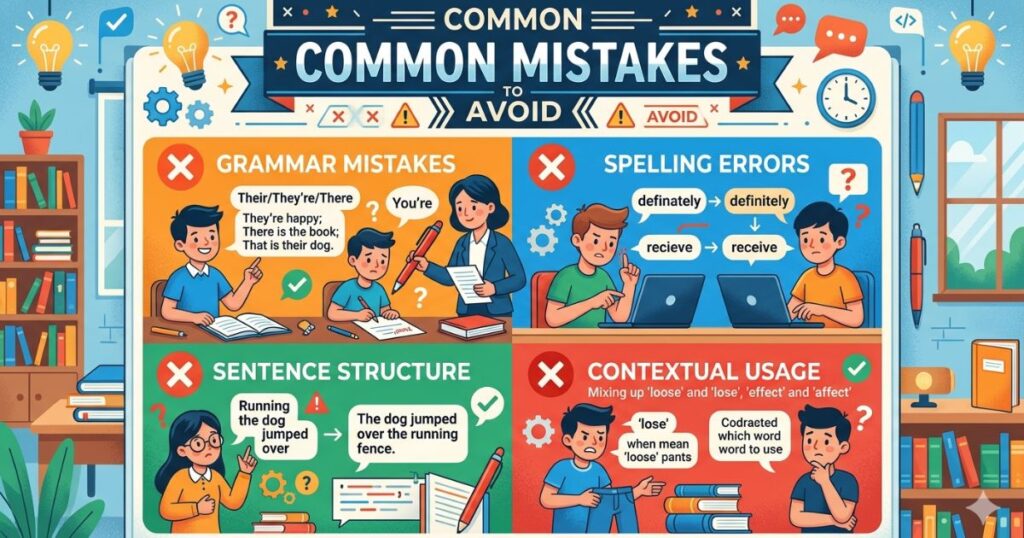
Knowing what not to do is just as important as knowing the rules. Here are the most frequent errors people make with these two words.
Using Incode Instead Of Encode
This is by far the most common mistake. Writers type incode when they mean encode, typically because of a quick typing error or a mental mix-up with the prefix.
- ❌ “Please incode the message before sending.”
- ✅ “Please encode the message before sending.”
- ❌ “The file was incoded in Base64.”
- ✅ “The file was encoded in Base64.”
Whenever you catch yourself typing incode in a technical, linguistic, or general context, replace it with encode immediately.
Assuming Encode Means Encrypt
This is another widespread misconception. Encoding and encryption are not the same thing, and confusing them can cause serious misunderstandings especially in cybersecurity and software development.
| Encoding | Encryption | |
| Purpose | Convert data to a different format | Protect data from unauthorized access |
| Reversible? | Yes easily decoded without a key | Yes but requires a secret key |
| Security? | No security guarantee | Provides confidentiality |
| Examples | Base64, UTF-8, ASCII, URL encoding | AES, RSA, SSL/TLS |
| Requires a key? | No | Yes |
Encoding is simply a format transformation. Anyone who knows the encoding scheme can decode it. Encryption, on the other hand, is designed to keep data secret and requires a key. As linguist and computer science educator Adam Chrenko notes, “Encoding isn’t ciphering, encryption or hashing: it is not used for hiding information.”
If you mean to say data is being secured or hidden, use encrypt, not encode.
Not Understanding The Context
The word encode has several distinct meanings depending on the field:
- In computing, it refers to converting data into a machine-readable format
- In biology, it refers to a gene’s role in producing a protein
- In linguistics, it refers to expressing meaning through language
Using it in the wrong context can make your writing confusing or inaccurate. Always be clear about which sense of encode you are using.
Tips For Avoiding Mistakes
Follow these practical strategies to ensure you always use the right word:
- Memorize the prefix difference: En- means “to put into.” So encode means to put something into code. There is no prefix in- that creates the word incode in standard English vocabulary.
- Run a dictionary check: If a word does not appear in Merriam-Webster, Oxford, or Collins dictionaries, it is almost certainly not standard English.
- Use spell-check tools: Most word processors and browsers will flag incode as a spelling error when used as a verb.
- Remember the UK postcode rule: Incode is a noun, not a verb. It refers exclusively to the second part of a UK postal code.
- Ask yourself: “Am I talking about UK mail?” If not, use encode.
Context Matters

Language rarely exists in a vacuum. The word you choose and whether it is correct often depends on the situation you are writing in.
Encode
The word encode works across a wide variety of professional and academic contexts. Here is where you will most commonly encounter it:
- Software development: Encoding data formats, file types, character sets (ASCII, UTF-8, Unicode)
- Cybersecurity: Understanding the difference between encoding, hashing, and encryption
- Genetics/Biology: How genes encode proteins and drive biological processes
- Linguistics: How speakers encode grammatical and cultural meaning in language
- Media & Broadcast: Encoding audio and video content for streaming or storage
- Cryptography: Historical and modern use of encoding to prepare messages for transmission
In all of these fields, encode is the correct, professional term.
Incode
The word incode, when used correctly, appears only in one specific context:
- UK postal system: Referring to the second half of a British postcode
If you work in UK address verification, postal logistics software, or geographic data management, you may encounter the term incode regularly. In the postcode W1A 2BB, the incode is 2BB, which directs Royal Mail to the exact delivery zone within a local area.
Outside this postal context, incode is not recognized as a valid English word.
Contextual Examples
Here is how context determines which word is appropriate:
| Situation | Correct Word | Example Sentence |
| A developer converting a file | Encode | “The API will encode your data in JSON format.” |
| A geneticist discussing DNA | Encode | “This sequence encodes the tumor suppressor protein.” |
| A linguist analyzing language | Encode | “Speakers encode politeness through word choice.” |
| A UK postal worker | Incode | “The incode routes the parcel to the right street.” |
| A security engineer | Encode | “We encode the payload before transmitting it.” |
| A journalist protecting sources | Encode | “She encoded her contact details in the report.” |
Exceptions To The Rules
While the general rule is simple, encode is correct, incode is mostly a misspelling language and is nuanced enough that a few exceptions and edge cases are worth acknowledging.
1. Contextual Usage
In very informal, non-standard, or creative writing, authors sometimes coin new words or use existing ones in unconventional ways. A fiction writer might use incode creatively to suggest embedding hidden information within a document or message. While this is not standard usage, creative contexts sometimes permit linguistic invention.
However, even in creative writing, using encode is safer and clearer. If you need to suggest hidden or embedded information, you can write: “the message was encoded within the image” which communicates the same idea without introducing a non-standard term.
2. Regional Differences
As established, incode carries legitimate meaning in British English specifically in the context of Royal Mail’s postcode system. This is a purely regional usage, and American English has no equivalent.
If you are writing for a UK audience and discussing postal addresses, address validation systems, or geographic data, using incode (as a noun) is perfectly correct. If you are writing for a global or American audience, this term may confuse readers who have never encountered it.
Best practice: If using incode in its postal sense, briefly define it for non-UK readers.
3. Industry-specific Terminology
In certain highly specialized technical fields such as geographic information systems (GIS), postal logistics software, or UK-focused address APIs incode is used as a standard technical noun. Developers building systems for the Royal Mail or working with UK address databases will regularly use the term in documentation, code comments, and database schemas.
Outside of these industries, however, incode as a technical term means nothing to the average reader, programmer, or linguist.
Practice Exercises
Put your knowledge to the test. These exercises will help you internalize the difference between encode and incode so you can use each word with confidence.
Exercise 1: Fill In The Blank
Choose the correct word encode or incode for each sentence below.
- The developer wrote a script to __________ the user’s data in SHA-256 format before storing it.
- In the UK postcode SW1A 2AA, the __________ is 2AA.
- Scientists discovered that a single gene can __________ instructions for multiple proteins.
- Royal Mail uses the __________ portion of a postcode to sort mail at the local delivery office.
- Before transmitting the file, you must __________ it using the agreed-upon format.
- The __________ in the postcode M1 1AE is 1AE.
- Language learners must practice how to __________ meaning in a new grammatical system.
Answer Key:
- encode | 2. incode | 3. encode | 4. incode | 5. encode | 6. incode | 7. encode
Exercise 2: Sentence Writing
Write one original sentence for each of the following scenarios. Use the correct form of encode or incode.
- A cybersecurity professional explaining data formatting to a client
- A UK postal worker explaining how parcels get sorted locally
- A biology teacher explaining how genes work
- A software developer describing a video compression task
- A linguistics professor discussing how speakers communicate emotion
(Sample answers will vary focus on using the correct word for the correct context.)
Exercise 3: Multiple Choice
Choose the best answer for each question below.
1. Which word is found in major English dictionaries such as Merriam-Webster and Oxford?
- A) Incode
- B) Encode ✅
- C) Both
- D) Neither
2. What does the incode refer to in a UK postcode?
- A) The area code
- B) The first part of the postcode
- C) The second part of the postcode ✅
- D) The country code
3. A programmer needs to convert a string to Base64 format. Which word should they use?
- A) Incode
- B) Encode ✅
- C) Decrypt
- D) Outcode
4. In the postcode EC2V 8RF, which part is the incode?
- A) EC2V
- B) EC
- C) 8RF ✅
- D) EC2
5. Which statement is TRUE about encoding and encryption?
- A) They are the same process
- B) Encoding provides strong data security
- C) Encryption requires a secret key, encoding does not ✅
- D) Incode is used in encryption systems
Conclusion
The encode vs encode debate has a clear answer: encode is correct for virtually every situation writing, technology, science, and everyday communication. Use incode only when referring to the second part of a UK postcode, and even then, define it for unfamiliar readers.
The confusion usually comes down to a simple typo the kind anyone can make under pressure. But getting words right builds credibility in professional writing, and that is always worth the extra second it takes to double-check.

Arslan is the creator and author behind FamesPedia, a platform focused on grammar, writing skills, and English language learning. Passionate about clear communication and effective writing, Arslan shares practical grammar tips, easy-to-follow language guides, and educational content to help readers improve their English with confidence.