If you’ve ever paused mid-sentence wondering whether to write well deserved or well-deserved, you’re not alone. This small hyphenation question trips up native speakers, professional writers, and English learners alike. The good news? Both forms are grammatically correct but they are not interchangeable.
Knowing when to use each one is what separates polished writing from careless errors.In this guide, you’ll get a clear, practical breakdown of both forms, their meanings, the grammar rules behind hyphenation, and plenty of real-world examples. By the end, you’ll never second-guess this phrase again.
Quick Answer: Well Deserved or Well-Deserved?
Both are correct. The choice depends entirely on where the phrase appears in a sentence.
| Form | Position in Sentence | Example |
| Well-deserved (hyphen) | Before a noun (attributive) | She earned a well-deserved raise. |
| Well deserved (no hyphen) | After a linking verb (predicate) | The raise was well deserved. |
This is the core rule: hyphenate before a noun, drop the hyphen after a verb.
Understanding the Grammar Rule Behind Hyphenation
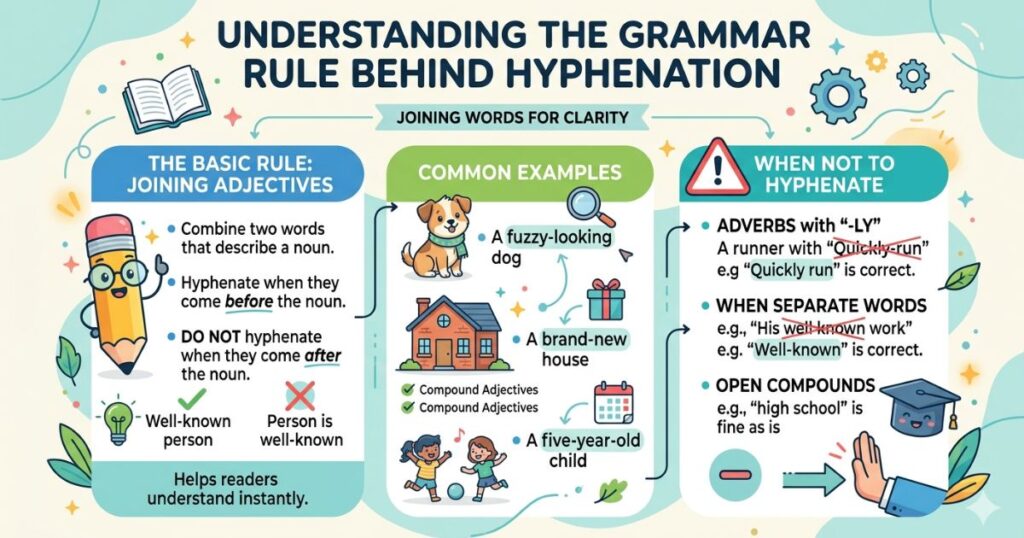
Before diving into each form individually, it helps to understand why hyphens exist in compound adjectives.
In English, when two or more words work together to modify a single noun, they are joined by a hyphen to make the meaning clear. These are called compound modifiers or compound adjectives. Common examples include:
- Well-known author
- High-quality materials
- Long-term commitment
The phrase well deserved follows this exact same pattern. Well is an adverb modifying the past participle deserved, and together they describe something earned through merit.
According to the AP Stylebook and most major style guides including Chicago and Oxford compound modifiers placed before a noun require a hyphen. When the same phrase appears after a linking verb (like is, was, seems, or feels), the hyphen becomes optional and is often dropped.
Well Deserved: Meaning and Usage
Well deserved (without a hyphen) functions as a predicate adjective; it comes after a linking verb and describes the subject of the sentence. In this position, the two words don’t directly modify a noun sitting right beside them, so the hyphen is not required.
When to Use Well Deserved
Use the unhyphenated form when:
- The phrase follows a linking verb such as is, was, seems, feels, or appears
- The phrase stands on its own, often as a short response or exclamation
- The noun being described appears before the phrase, not immediately after it
What Does Well Deserved Mean?
The phrase conveys that a reward, recognition, or outcome is fully earned and justified. It implies that effort, dedication, or merit genuinely warrants whatever is being acknowledged. Saying something is well deserved is a way of confirming that the praise or reward is not accidental; it is the natural result of hard work.
Examples of Using Well Deserved in a Sentence
Here are natural, real-world examples of the unhyphenated form used correctly:
- The award was well deserved; she had worked tirelessly for three years.
- His promotion was well deserved after leading the team through such a difficult quarter.
- The applause at the end of the performance was well deserved.
- Their victory in the championship was absolutely well deserved.
- Congratulations! This recognition is well deserved
- After everything he went through, that rest was well deserved.
- The criticism was well deserved, and the team accepted it with grace.
- Her reputation as an excellent mentor is well deserved.
Notice that in every example above, the phrase appears after a verb not right before a noun. That’s the consistent pattern.
Also Get Information From Here: Inhouse or In-House or In House? Which Is Correct?
Well-Deserved: Meaning and Usage
Well-deserved (with a hyphen) functions as a compound adjective placed directly before a noun. The hyphen links well and deserves together to show that both words act as a single descriptive unit modifying the noun that follows.
Without the hyphen in this position, the sentence can feel ambiguous or incomplete. The hyphen removes any doubt about which words belong together and what they’re describing.
When to Use Well-Deserved
Use the hyphenated form when:
- The phrase directly precedes a noun
- You want to describe the noun as something rightly earned
- You’re writing in a professional, academic, or formal context
What Does Well-Deserved Mean?
The meaning is the same as the unhyphenated form of something fully earned, merited, or justified. The difference is purely structural. Using well-deserved before a noun is the grammatically precise way to show that the noun (the award, break, praise, recognition) is one that was rightfully earned.
Examples of Using Well-Deserved in a Sentence
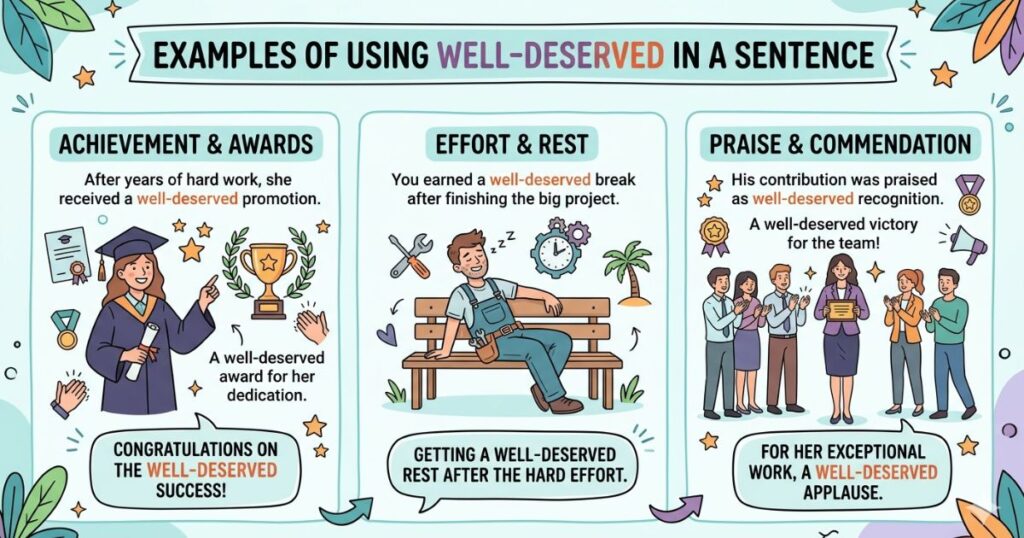
Here are clear, correct examples of the hyphenated form in action:
- He finally took a well-deserved vacation after months of nonstop work.
- She received a well-deserved promotion for her outstanding leadership.
- The coach gave his team a well-deserved day off.
- It was a well-deserved win after all the preparation they had put in.
- The director accepted a well-deserved award at the ceremony.
- They enjoyed a well-deserved celebration after completing the project.
- It’s a well-deserved punishment, and hopefully it leads to some reflection.
- Her well-deserved recognition finally came after years of quiet effort.
In each of these, well-deserved appears immediately before the noun it describes vacation, promotion, win, award, and so on. The hyphen makes the relationship between the words instantly clear.
Side-by-Side Comparison
| Scenario | Correct Form | Example Sentence |
| Before a noun | Well-deserved | A well-deserved break |
| After is/was/seems | Well deserved | The break was well deserved |
| As a standalone exclamation | Well deserved | That’s well deserved! |
| In a formal report or resume | Well-deserved | A record of well-deserved achievements |
| In casual speech after a verb | Well deserved | It was well deserved |
Common Mistakes to Avoid
Even experienced writers make these errors. Here’s what to watch out for:
- Forgetting the hyphen before a noun: Writing a well deserved award without the hyphen before the noun looks careless in professional writing.
- Adding an unnecessary hyphen after a verb: The award was well-deserved is technically acceptable in some style guides but often unnecessary.
- Using much deserved as a substitute: While occasionally heard in speech, much deserved sounds dated and awkward. Stick with well deserved or well-deserved
- Confusing it with well deserve: Well deserve (using the base verb) is only grammatically correct with a subject in present tense. They well deserve the reward and even then it sounds unusual in everyday English.
British English vs. American English
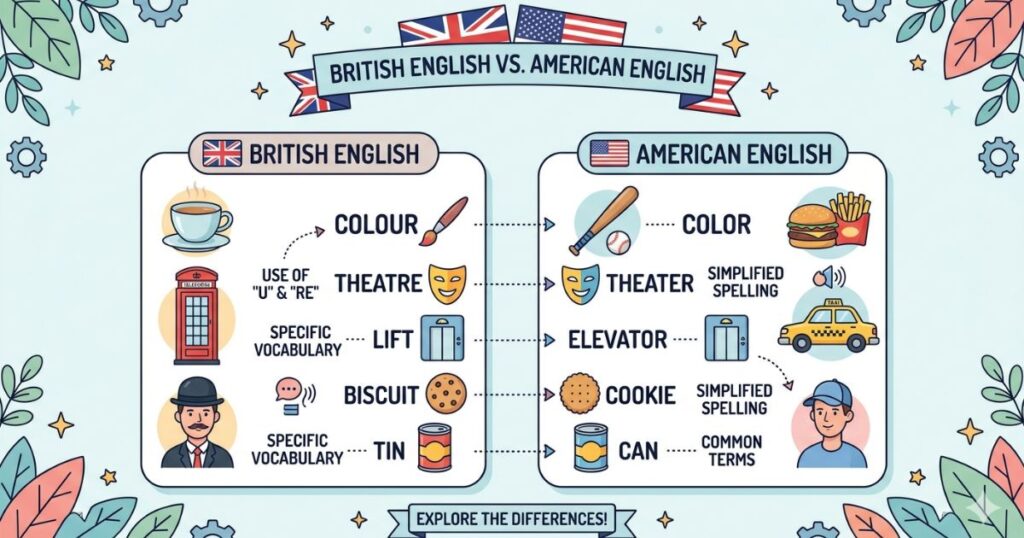
One reassuring fact: this rule is consistent across both sides of the Atlantic. Whether you’re writing for a British or American audience, the hyphenation rule stays the same.
- British: She went on a well-deserved holiday
- American: She went on a well-deserved vacation
The grammar is identical. Only the vocabulary changes.
What Major Dictionaries Say
Both forms have full dictionary recognition:
- Cambridge Dictionary officially lists well deserved and offers well-deserved as an accepted alternative spelling.
- Oxford Dictionary provides an entry for well-deserved in the hyphenated form while acknowledging that the unhyphenated variation is also correct.
- Google Ngram Viewer shows that well-deserved is the slightly more popular choice in published writing, but both forms appear regularly in print.
This confirms that neither form is wrong, context and position are what determine correctness.
Conclusion
The difference between well deserved and well-deserved comes down to one simple rule: hyphenate before a noun, drop the hyphen after a verb. Both forms are grammatically correct and recognized by major dictionaries worldwide.
Use well-deserved directly before a noun, as in a well-deserved promotion, and well deserved after a linking verb, as in the promotion was well deserved. Master this small distinction, and your writing will instantly feel more polished and credible.

Arslan is the creator and author behind FamesPedia, a platform focused on grammar, writing skills, and English language learning. Passionate about clear communication and effective writing, Arslan shares practical grammar tips, easy-to-follow language guides, and educational content to help readers improve their English with confidence.