If you’ve ever typed less then in an email and then second-guessed yourself, you’re not alone. This is one of the most common grammar slip-ups in the English language and the confusion makes sense, since then and than are only one letter apart. But when it comes to comparisons, only one of these is correct.
The short answer: less than is always correct. Less then is always a mistake.
This guide breaks down exactly why, gives you plenty of real-world examples, and helps you remember the rule once and for all.
Less Then vs. Less Than: At a Glance
| Phrase | Correct? | Use Case |
| Less than | ✅ Yes | Comparing quantities, amounts, or numbers |
| Less then | ❌ No | Never correct in standard English |
What Does Less Then Mean?
Less then doesn’t have a recognized meaning in English grammar. It’s a misspelling that results from confusing two words that look and sound nearly identical: then and than.
Then is an adverb that relates to time or sequence. It answers the question when? or indicates what happens next. You’ll find it in sentences like:
- We finished dinner, then watched a movie.
- Back then, smartphones didn’t exist.
- First mix the flour, then add the eggs.
Notice that in every case, then points to a moment in time or a step in a sequence not a comparison. That’s the key. When you pair less (a word that signals comparison) with then (a word about time), the result is grammatically meaningless.
Why Do People Write Less Then?
The mix-up happens for a few reasons:
- Then and than are homophones in many regional accents they sound identical when spoken.
- Both words are short and common, making it easy to type one when you mean the other.
- Autocorrect tools don’t always catch this error because both words are real English words.
It’s not a sign of poor intelligence, it’s simply a habitual typo that needs correcting.
What Does Less Than Mean?
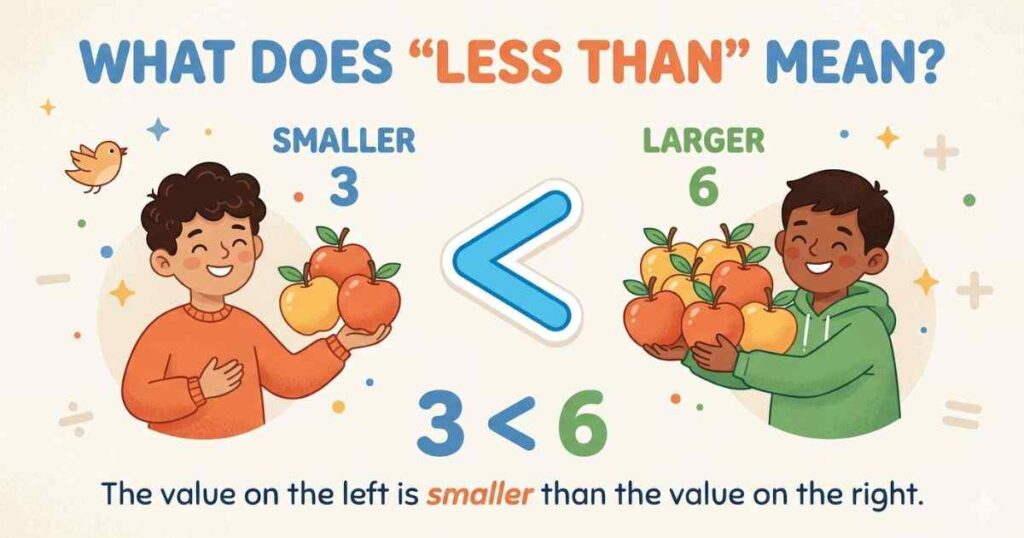
Less than is the grammatically correct phrase used to show that one quantity, amount, or value is smaller than another. Than is a conjunction its entire purpose in English is to connect two things being compared.
Think of it this way: whenever you see comparative words like more, less, better, worse, older, younger, the word that follows is almost always than.
- More than enough
- Better than expected
- Less than ideal
Less than works as a synonym for under, below, or not as much as. It appears in formal writing, casual speech, mathematics, and everyday comparisons alike.
Examples of Less Than Used Correctly
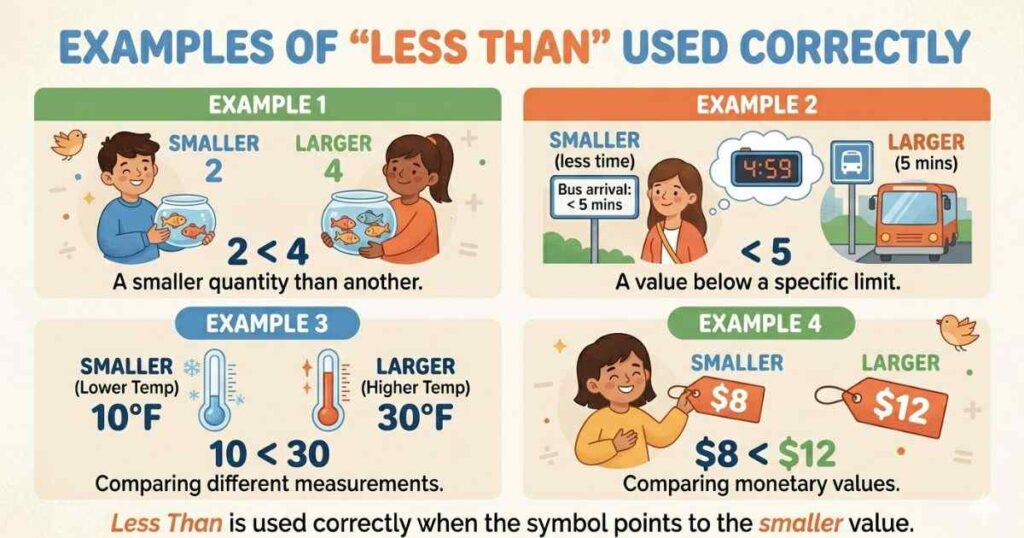
Here are sentences showing less than in a variety of real-world contexts:
Talking about time:
- The flight takes less than two hours.
- You have less than a week to submit your application.
Talking about money:
- The repairs cost less than $200.
- She earns less than her colleagues in the same role.
Talking about quantities:
- There are less than ten items left in stock.
- He drank less than half the bottle.
Talking about effort or quality:
- The final product was less than satisfactory.
- I expected more, but the results were less than impressive.
In math and data:
- 7 is less than 10.
- The temperature dropped to less than freezing overnight.
Examples of Less Then Used Incorrectly
To make the contrast clear, here are incorrect sentences using less then, each followed by the corrected version:
| Incorrect (Less Then) | Correct (Less Than) |
| She has less then five minutes. | She has less than five minutes. |
| This weighs less then a pound. | This weighs less than a pound. |
| I need less then half the ingredients. | I need less than half the ingredients. |
| The project took less then expected. | The project took less than expected. |
| He was paid less then his coworkers. | He was paid less than his coworkers. |
In every case, switching then to than is the fix.
Than vs. Then The Core Difference
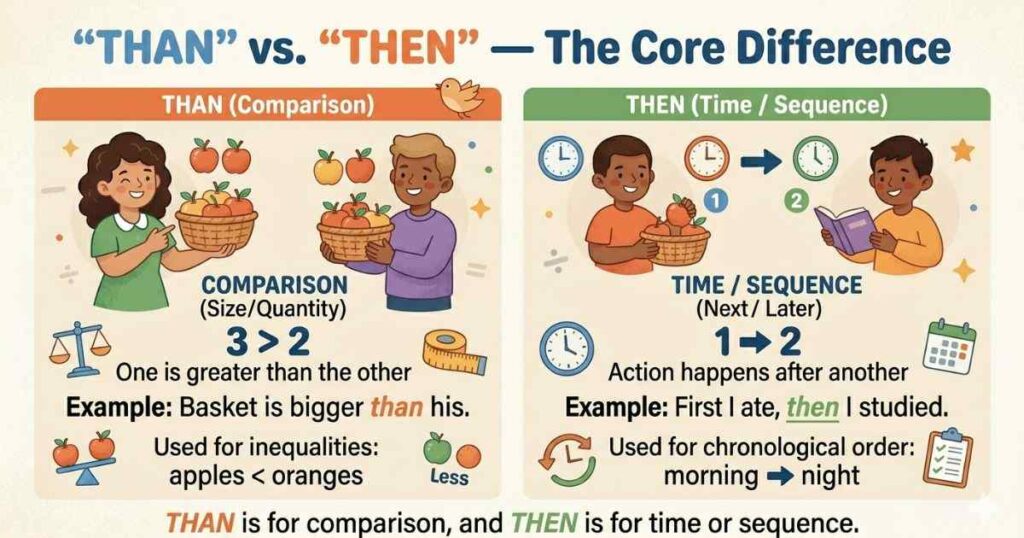
Understanding why less than is correct comes down to understanding the difference between these two small but important words.
Than Used for Comparisons
Then is a conjunction (and sometimes a preposition) that introduces the second element in a comparison. It always signals that two things are being measured against each other.
Key rule: If a comparative adjective or adverb is nearby words like more, less, better, worse, higher, lower, older, faster the word you need is than.
Examples:
- She runs faster than him.
- This version is more reliable than the last.
- I’d rather work late than miss the deadline.
Then Used for Time and Sequence
Then functions as an adverb that indicates a specific point in time, a subsequent event, or a logical consequence.
Key rule: If you can replace the word with at that time, next, or after that without changing the meaning, use then.
Examples:
- We finished the report, then sent it to the client.
- Back then, the rules were different.
- If you’re ready, then we can begin.
Read Information About This: Inhouse or In-House or In House? Which Is Correct?
A Simple Memory Trick
Here’s a trick used by grammar teachers that actually works:
Then for comparisons both words contain the letter a. Then for time both words contain the letter e.
So: less → comparison → than → less than. ✅
Less Than vs. Fewer Than A Bonus Distinction
While we’re here, it’s worth noting another common confusion: when should you say less than versus fewer than?
| Use Fewer Than | Use Less Than |
| Countable nouns (things you can count individually) | Uncountable nouns (amounts measured as a whole) |
| Fewer than 10 people | Less than half the crowd |
| Fewer than 5 mistakes | Less than $50 |
| Fewer than 3 options | Less than a liter |
The traditional rule is that fewer goes with things you can count one by one, while less goes with things measured in bulk. However, less than is widely accepted with numbers, distances, and money for example, less than 3 miles or less than $20 even when those involve countable units.
Which Is Used More Often?
Google Ngram data and grammar research consistently show that less than dominates in published English by an enormous margin. Less then appears almost exclusively as a typo; it has no recognized grammatical function and carries no legitimate usage history in formal or informal writing.
Simply put: if you see less than in a piece of writing, it’s an error that needs correcting.
Quick Tips to Avoid the Mistake
- Run a find-and-replace check Search for less than in any document before publishing.
- Read the sentence aloud Less than flows naturally; less then tends to sound off.
- Use the substitution test Try replacing the word with after that. If it sounds wrong, you need then, not then.
- Enable grammar tools Tools like Grammarly, ProWritingAid, or Microsoft Editor flag less than as an error.
Conclusion
The difference between less then and less than is small on the page, just one letter but significant in meaning. Less than is the correct phrase for every situation where you want to compare quantities, amounts, or values. Less then is not a real phrase; it’s a typo that slips through when the brain swaps a comparison word for a time word.
The fix is simple: pair less with than any time you’re making a comparison, and save then for talking about time or sequence. Once that distinction clicks, you’ll never mix them up again.

Arslan is the creator and author behind FamesPedia, a platform focused on grammar, writing skills, and English language learning. Passionate about clear communication and effective writing, Arslan shares practical grammar tips, easy-to-follow language guides, and educational content to help readers improve their English with confidence.