Have you ever stared at a piece of cloth on your floor and thought, “Wait, is this a rug or a rag?” You are not alone. The words rug and rag sound nearly identical, are both made of fabric, and yet they live completely different lives in your home. One decorates your living room and keeps your feet warm. The other quietly handles spills, dust, and dirty tasks without complaint.
Understanding the rug vs. rag difference is more useful than it sounds. Whether you are shopping for home décor, writing an essay, or just trying to name something correctly, knowing which word to use and when saves you embarrassment and confusion. This guide covers the origin, meaning, pronunciation, types, and real-world usage of both words so you can confidently tell them apart.
What Is the Core Difference Between a Rug and a Rag?
At the most basic level, the difference comes down to purpose.
- A rug is a thick, woven fabric used to cover part of a floor. It adds decoration, warmth, comfort, and style to a room.
- A rag is a worn, torn, or leftover piece of cloth used for cleaning, wiping, polishing, or crafts.
One enhances your space; the other maintains it. That single distinction decorative vs. practical is the fastest way to remember which word belongs where.
| Feature | Rug | Rag |
| Primary use | Floor covering, decoration | Cleaning, wiping, DIY |
| Material quality | Thick, durable, often new | Worn, torn, or recycled |
| Typical location | Living room, bedroom, hallway | Kitchen, garage, cleaning bin |
| Cost | Moderate to high | Very low or free |
| Lifespan | Years with proper care | Short-term, disposable |
| Can overlap? | Yes rag rugs combine both | Yes old rags make rag rugs |
Origin of the Words Rug and Rag
Where Did “Rug” Come From?
The word rug traces back to Middle English rugge, meaning a coarse piece of cloth. Linguists also connect it to the Old Norse word rogg, which referred to a shaggy tuft or rough texture, and to the pre-German term rawwa. English speakers began using “rug” around the mid-15th century to describe coarse fabric in general.
By the early 19th century, the meaning shifted specifically to a floor covering smaller than a carpet and used for decoration or warmth.Interestingly, the word “rug” also developed a slang meaning: a man’s toupee or hairpiece covering a bald spot. The logic is the same: something thick and soft that covers something else.
Where Did “Rag” Come From?
The word rag comes from Middle English ragge, referring to a torn, worn-out, or worthless piece of cloth. Rags have always implied something past its prime stretched, faded, frayed at the edges. Historically, rags were far from useless. Before modern cleaning products, rags were essential tools for dusting, polishing, and even insulating cold homes.
Over centuries, both words became firmly established in everyday English yet their similar sound still trips people up today.
Rug Pronunciation in English
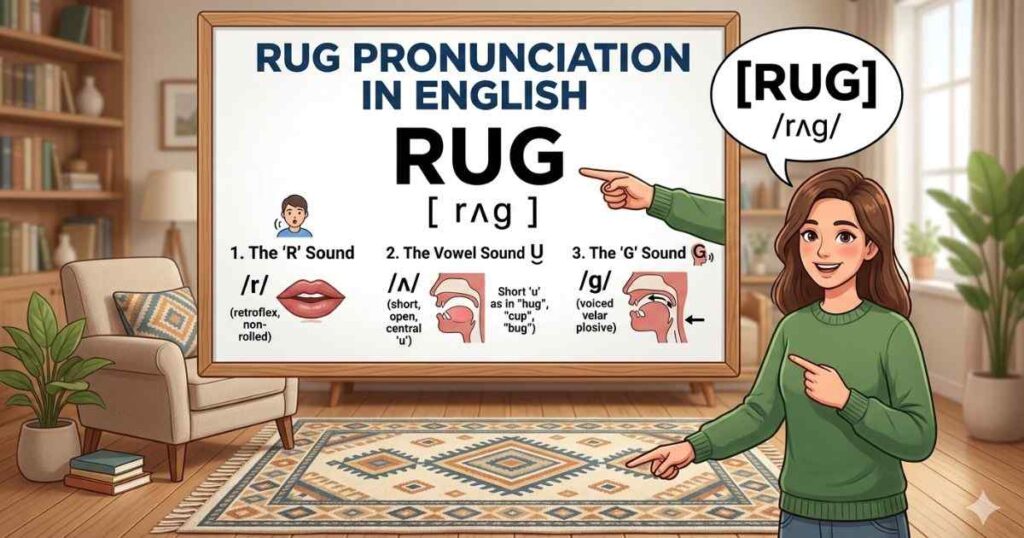
Rug is pronounced /rʌɡ/ rhymes with bug, mug, and jug. The vowel sound is a short “u” (as in “cup”), and the final “g” is always hard, never soft.
Rag is pronounced /ræɡ/ rhymes with bag, tag, and flag. The vowel here is a flat “a” sound (as in “cat”), which is slightly more open than the “u” in rug.
Quick tip: If you say them back to back rug, rag, rug, rag you can hear the vowel shift clearly. That small difference in sound carries a very large difference in meaning.
How People Use Rugs and Rags?
How Rugs Are Used
Rugs serve both functional and aesthetic purposes in everyday life. Here is how most people put them to work:
- Room definition: A well-placed area rug anchors furniture and defines a seating or dining zone within an open space.
- Floor protection: Rugs guard hardwood or tile floors from scratches, scuffs, and everyday wear.
- Warmth and insulation: Thick rugs reduce heat loss during cold months, making rooms noticeably warmer.
- Sound absorption: Rugs dampen noise, especially in homes with hard floors and high ceilings.
- Safety: Non-slip rugs in bathrooms and kitchens can prevent dangerous slips and falls.
- Style and décor: A Persian, woven, or printed rug can completely transform a plain room into something polished and inviting.
How Rags Are Used?
Rags are the quiet workhorses of the home. Their uses are practical, frequent, and surprisingly wide:
- Household cleaning: Wiping counters, dusting shelves, scrubbing sinks, and cleaning appliances.
- Spill management: Absorbing liquid spills quickly before they stain.
- Polishing: Buffing furniture, silverware, shoes, or car surfaces.
- DIY and crafts: Applying stain, varnish, or paint during woodworking or home improvement projects.
- Eco-friendly solution: A single old T-shirt can be cut into several cleaning rags, reducing paper towel waste significantly.
The Fascinating Overlap: Rag Rugs
Here is where rugs and rags genuinely meet. A rag rug is exactly what it sounds like a rug made from rags. Small strips of recycled fabric are either woven, braided, hooked, or poked through a hessian (burlap) backing to create a decorative, functional floor covering.
Rag rugs have a long history, especially in Victorian Britain and early American homes, where wasting fabric was unthinkable. Today, they are popular for their:
- Eco-friendly nature recycled clothing and textiles find a second life
- Unique, handmade character no two rag rugs look exactly alike
- Affordability materials cost almost nothing
- Crafting appeal a satisfying DIY project for creative homeowners
This creative overlap proves that the line between rug and rag is not always rigid. With the right craft skills, yesterday’s worn-out clothing becomes tomorrow’s living room centerpiece.
You May Also Like This: Nonresponsive vs Unresponsive: Which One Is the Correct One?
More About Rugs: Types You Should Know
Choosing the right rug depends on placement, budget, traffic level, and personal style. Here is a breakdown of the most common rug types:
By Material
- Wool Rugs Naturally durable, soft underfoot, and often handmade. More expensive, but long-lasting. Great for high-traffic areas.
- Silk Rugs Luxuriously shiny and delicate. Best for low-traffic areas like formal living rooms or display spaces.
- Cotton Rugs Budget-friendly and easy to wash. They tend to fade faster and do not repel stains as well as wool.
- Jute and Bamboo Rugs Natural, earthy materials that add an organic look. Ideal for large rooms needing an affordable, natural-fiber option.
- Leather, Hide, and Sheepskin Rugs Easy to clean, visually striking, and perfect beside a bed or sofa.
- Faux Fur / Faux Hide Rugs Budget-friendly alternatives to real hides. They can shed when new and require careful cleaning.
- Polypropylene Rugs Synthetic, water-resistant, and affordable. A good choice for outdoor spaces or high-spill zones.
- Microfiber / Polyester Rugs Soft, economical, and available in vibrant colors. A great option for quick style updates without a big investment.
By Style and Use
- Area Rugs The most common type. They define and anchor a specific zone within a larger room.
- Persian Rugs Known for intricate, hand-knotted designs and exceptional craftsmanship. Often collector items.
- Rag Rugs Handmade from recycled fabric strips. Rustic, charming, and eco-conscious.
- Outdoor Rugs Made from weather-resistant materials like polypropylene. Designed to withstand moisture, UV light, and foot traffic.
- Runner Rugs Long, narrow rugs designed for hallways, staircases, or kitchen aisles.
Rug vs. Rag: Examples in a Sentence
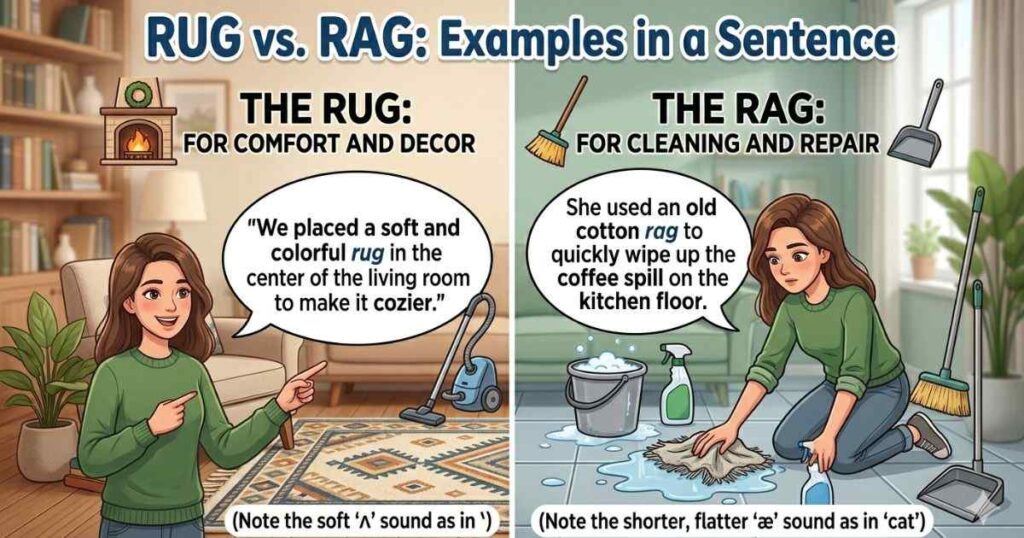
Seeing both words used in context is one of the fastest ways to lock in the difference. Here are clear, natural examples:
Rug used in sentences:
- The living room felt instantly cozier after she placed a red Persian rug in the center.
- He slipped on the wet rug near the bathroom door.
- My dog curls up on the soft rug in front of the fireplace every evening.
- Someone tried to sweep the problem under the rug instead of addressing it directly.
- He wore a rug to the costume party as part of his disguise.
Rag used in sentences:
- She grabbed a damp rag to wipe the tomato sauce off the counter.
- The mechanic used an oily rag to clean his hands after the repair.
- He cut his old flannel shirt into cleaning rags to use in the garage.
- The painter dabbed stain onto the wood with a folded rag.
- After years of wear, the once-bright curtain looked like nothing more than a rag.
Common Mistakes and How to Avoid Them
| Mistake | Correct Usage |
| “I bought a rag for my living room.” | Use rugs for decoration. |
| “Use the rug to clean up that spill.” | Use rag rags to handle cleaning tasks. |
| Typing “rug” when you mean “rag” due to similar spelling | Double-check context: floor = rug, cleaning = rag. |
A helpful mental shortcut: Rug = Room décor. Rag = Routine cleaning.
Conclusion
The rug vs. rag debate might seem small, but it matters in conversation, writing, shopping, and home care. A rug brings beauty, warmth, and personality to your floors. A rag quietly keeps everything clean, spill-free, and tidy.
Both have genuine value and in the creative case of a rag rug, they combine into something greater than either alone.Now that you know the origin, meaning, pronunciation, types, and proper usage of each word, you will never mix them up again. Whether you are styling your living room or scrubbing your kitchen, you know exactly which one belongs in your hands.

Arslan is the creator and author behind FamesPedia, a platform focused on grammar, writing skills, and English language learning. Passionate about clear communication and effective writing, Arslan shares practical grammar tips, easy-to-follow language guides, and educational content to help readers improve their English with confidence.