Saying “keep up the good work” is one of the easiest ways to praise someone, but repeating the same line over and over can start to feel flat. Whether you are a manager writing performance feedback, a teacher encouraging a student, or a friend cheering someone on, having fresh words of encouragement ready makes your praise feel genuine instead of automatic.
This guide breaks down the meaning of the phrase, when it fits best, and gives you 31+ alternative phrases for “keep up the good work” with real examples you can use right away in emails, chats, reviews, or everyday conversation.
What Does “Keep Up the Good Work” Mean?

“Keep up the good work” is a motivational phrase used to acknowledge that someone is doing well and to encourage them to continue at the same standard. It combines two ideas:
- Keep up meaning to maintain or continue at the current pace
- Good work meaning the quality of effort or performance already shown
Put together, the phrase tells someone their current performance is valued and worth sustaining. It is a short, direct way to give positive reinforcement without needing a long explanation.
You will often see it used by:
- Managers giving feedback to employees
- Teachers responding to student progress
- Coaches motivating athletes
- Friends and family supporting someone’s goals
When to Use “Keep Up the Good Work”
Knowing when this phrase fits naturally helps you avoid sounding forced or repetitive. It works best in these situations:
- After a completed task that met or exceeded expectations
- During ongoing projects where consistent effort matters
- In performance reviews to reinforce good habits
- In casual encouragement among friends, teammates, or classmates
- In follow up messages after checking on someone’s progress
It is less effective when the feedback needs to be specific. If someone just closed a major deal or fixed a tricky problem, a generic “keep up the good work” can feel less meaningful than naming the exact thing they did well. That is exactly where synonyms and alternative phrases become useful.
Is It Professional or Polite to Say “Keep Up the Good Work”?
Yes, it is generally professional and polite. The phrase is widely accepted in workplace communication because it is short, positive, and non intrusive. It works well in emails, one on one meetings, and written performance notes.
That said, there are a few things to keep in mind:
- Overusing the exact same phrase can start to feel impersonal or lazy
- Pairing it with a specific detail makes it feel more sincere
- In very formal settings, phrases like “continue the excellent work” or “your efforts are paying off” may sound slightly more polished
Used with sincerity and in the right context, “keep up the good work” remains a safe, respectful choice. Mixing it with other encouraging phrases simply helps your feedback feel more personal and less routine.
Synonyms for “Keep Up the Good Work”
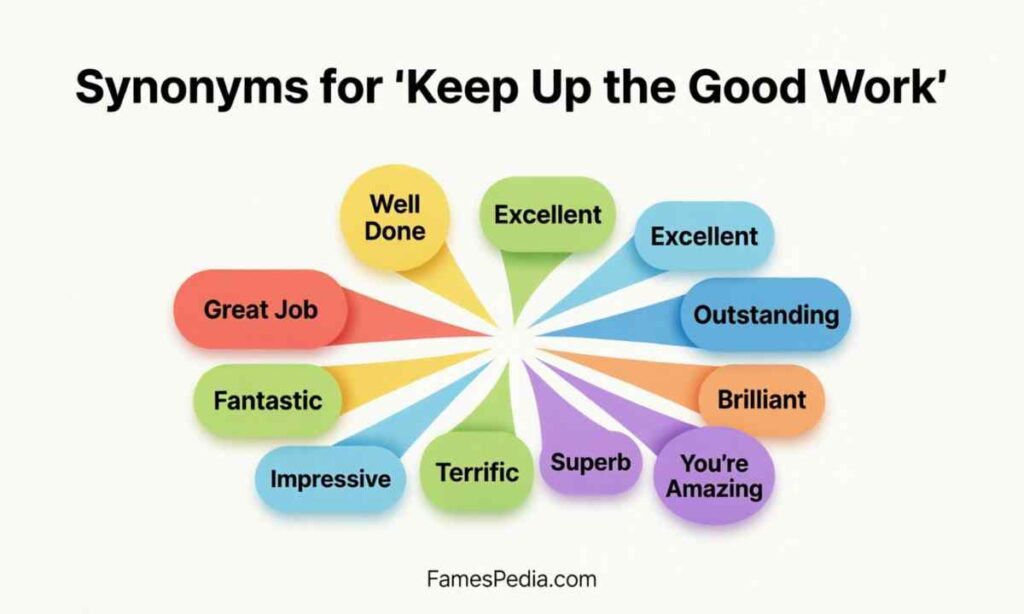
Below is a categorized table of alternative expressions before we go through each one in detail with examples.
| Category | Example Phrases |
| Casual and friendly | Way to go, You’re doing amazing, You’ve got this |
| Professional and formal | Outstanding effort, Exceptional performance, Admirable effort |
| Motivational and energizing | Keep it going, Keep excelling, Keep up the momentum |
| Achievement focused | You nailed it, Stellar job, Remarkable effort |
Now let’s look at each alternative individually, along with its meaning, tone, and a sample message.
Great Job!
Meaning: A short, universal compliment that praises the outcome of someone’s work.
Best used: Everyday feedback, casual or professional settings.
Example: “Great job on the presentation today, the client loved your ideas.”
Well Done!
Meaning: A classic phrase that recognizes a task completed successfully.
Best used: Emails, chats, in person praise.
Example: “Well done on hitting your sales target this month.”
Excellent Work!
Meaning: Highlights that the quality of the work went beyond expectations.
Best used: Performance reviews, formal recognition.
Example: “Excellent work on the quarterly report, the data breakdown was very clear.”
Outstanding Effort!
Meaning: Focuses on the amount of effort someone put in, not just the result.
Best used: When someone worked hard under pressure or tight deadlines.
Example: “Outstanding effort getting this project done ahead of schedule.”
You’re Doing Amazing!
Meaning: A warm, encouraging phrase that reassures someone their overall progress is strong.
Best used: Ongoing projects, personal encouragement, coaching.
Example: “You’re doing amazing, keep trusting the process.”
Fantastic Performance!

Meaning: Praises a specific, standout performance or achievement.
Best used: After a presentation, event, or milestone.
Example: “Fantastic performance in today’s meeting, your points really landed.”
Impressive Work!
Meaning: Expresses genuine admiration for the skill or quality shown.
Best used: Creative projects, technical achievements, detailed tasks.
Example: “Impressive work on the new design, the layout feels much cleaner.”
Keep It Going!
Meaning: Encourages someone to maintain their current momentum.
Best used: Mid project encouragement, casual check ins.
Example: “You’re halfway through the goal already, keep it going.”
Way to Go!
Meaning: A casual, upbeat way to celebrate an accomplishment.
Best used: Friends, teammates, informal workplace chats.
Example: “Way to go on finishing the marathon, that’s a huge achievement.”
Hats Off to You!
Meaning: Shows respect and admiration for someone’s accomplishment.
Best used: Notable achievements, formal or semi formal recognition.
Example: “Hats off to you for handling that client issue so smoothly.”
You Nailed It!
Meaning: Confirms that someone executed a task perfectly.
Best used: After a task, pitch, or performance goes exactly as planned.
Example: “You nailed it in the interview, they were impressed.”
Superb Job!
Meaning: A stronger, more enthusiastic version of “great job.”
Best used: When the results clearly exceed expectations.
Example: “Superb job managing the event, everything ran smoothly.”
Remarkable Effort!
Meaning: Highlights effort that stands out as unusually strong or dedicated.
Best used: Long term projects, challenging circumstances.
Example: “Remarkable effort pulling this campaign together in such a short time.”
Brilliant Work!
Meaning: Praises creativity, intelligence, or skill behind the work.
Best used: Creative fields, problem solving tasks.
Example: “Brilliant work on solving that bug, it had been stuck for weeks.”
Keep Shining!
Meaning: An uplifting phrase that encourages someone to keep showing their talent.
Best used: Personal encouragement, social messages, students.
Example: “You’re inspiring the whole team, keep shining.”
ou’re on the Right Track!
Meaning: Reassures someone that their current approach is working.
Best used: Mentoring, coaching, early stage projects.
Example: “Your revised plan looks solid, you’re on the right track.”
Tremendous Job!
Meaning: A formal, strong compliment for significant achievements.
Best used: Leadership feedback, formal recognition.
Example: “Tremendous job leading the team through this transition.”
Keep Excelling!

Meaning: Encourages someone to continue performing at a high level.
Best used: Ongoing high performers, academic or professional settings.
Example: “Your grades keep improving every term, keep excelling.”
You’re Doing Fantastic!
Meaning: A friendly, reassuring compliment about overall performance.
Best used: Casual encouragement, personal check ins.
Example: “You’re doing fantastic with the new routine, don’t stop now.”
Exceptional Performance!
Meaning: A formal phrase used to describe performance that stands well above average.
Best used: Performance reviews, award nominations.
Example: “Exceptional performance this quarter, your numbers were the highest on the team.”
You’re Killing It!
Meaning: A casual, energetic way to say someone is doing extremely well.
Best used: Informal workplace chats, social media, friends.
Example: “You’re killing it with this new content series.”
Admirable Effort!
Meaning: Recognizes effort that deserves respect, even if the outcome is still in progress.
Best used: Semi formal settings, coaching, academic feedback.
Example: “Admirable effort on the project proposal, the research was thorough.”
Keep Up the Momentum!
Meaning: Encourages someone to maintain the pace and energy they already have.
Best used: Team projects, sales goals, fitness or personal goals.
Example: “Sales are up two months in a row, keep up the momentum.”
You’ve Got This!
Meaning: A supportive phrase that builds confidence, especially before a challenge.
Best used: Encouragement before a task, exam, or presentation.
Example: “The final round is tomorrow, you’ve got this.”
Consistently Great Work!
Meaning: Praises reliability and steady performance over time, not just a single task.
Best used: Long term employees, students, recurring projects.
Example: “Consistently great work all semester, it really shows in your grades.”
Stellar Job!

Meaning: A vivid, enthusiastic compliment for exceptional results.
Best used: Standout achievements, informal or semi formal praise.
Example: “Stellar job on the product launch, the feedback has been great.”
Keep It Up!
Meaning: A short, simple way to encourage continued effort.
Best used: Quick feedback, casual encouragement, everyday use.
Example: “Great numbers again this week, keep it up.”
Wonderful Work!
Meaning: A warm, appreciative compliment suited for both personal and professional use.
Best used: Creative work, community projects, personal achievements.
Example: “Wonderful work organizing the fundraiser, it made a real difference.”
You’re Doing Wonderfully!
Meaning: A gentle, supportive phrase that reassures someone their progress is strong.
Best used: Personal encouragement, coaching, sensitive situations.
Example: “You’re doing wonderfully with your recovery, take it one day at a time.”
Keep Achieving!
Meaning: Encourages someone to keep reaching new goals and milestones.
Best used: Career growth, academic progress, long term goals.
Example: “Every milestone this year has been impressive, keep achieving.”
You May Also Like These Terms:
“35+ Other Ways to Say “I Hope Everything Is Going Well”
“Cacoon or Cocoon: Which Spelling is Correct?“
“39+ Other Ways to Say “Rest in Peace” (With Examples)“
Continue the Excellent Work!
Meaning: A polished, formal way to encourage someone to sustain high quality performance.
Best used: Formal business emails, official recognition, client communication.
Example: “The team has delivered strong results this quarter, please continue the excellent work.”
Bonus Alternatives to Mix Into Your Feedback
- Your hard work is paying off
- You’re setting the bar high
- Keep striving, your dedication shows
- You’re making a real difference
- Keep pushing forward
- I couldn’t have done it better myself
- This is great work, keep it that way
How to Choose the Right Alternative
Picking the right phrase depends on tone, relationship, and context. Use this quick guide:
| Situation | Suggested Phrases |
| Formal business email | Continue the excellent work, Exceptional performance, Admirable effort |
| Casual team chat | You’re killing it, Way to go, Keep it up |
| Coaching or mentoring | You’ve got this, You’re on the right track, Keep excelling |
| Student feedback | Consistently great work, Keep shining, Remarkable effort |
Final Thoughts
“Keep up the good work” is a reliable, professional phrase that fits almost any setting, but it works best when it is not your only option. Rotating through alternatives like “outstanding effort,” “you’ve got this,” or “continue the excellent work” keeps your feedback sounding thoughtful rather than automatic.
The next time you want to recognize someone’s effort, pick a phrase from this list that matches the tone of the moment. A little variety goes a long way in making your praise feel real, specific, and worth remembering.

Arslan is the creator and author behind FamesPedia, a platform focused on grammar, writing skills, and English language learning. Passionate about clear communication and effective writing, Arslan shares practical grammar tips, easy-to-follow language guides, and educational content to help readers improve their English with confidence.