Hearing good news from a friend, coworker, or family member is one of life’s small joys. But if you find yourself typing “happy to hear that” in every single reply, your responses can start to feel a little flat. The good news? English gives you dozens of warmer, more specific, and more expressive ways to share in someone’s happiness.
Whether you’re replying to a text from a close friend, writing a professional email, or responding to a colleague’s good news in a meeting, the right phrase can make your response feel more genuine and memorable. In this guide, you’ll find 31 other ways to say “happy to hear that,” complete with real examples, tone notes, and guidance on when each phrase works best.
What Does “Happy to Hear That” Mean?

“Happy to hear that” is a simple, friendly expression used to show that you feel pleased or glad after learning something positive. It’s typically used as a direct response to good news, whether that’s a promotion, a personal achievement, good health results, or simply a piece of information that puts your mind at ease.
At its core, the phrase communicates three things at once:
- You were listening.
- The news genuinely pleased you.
- You want the other person to know you care about what they shared.
It’s a short phrase, but it carries emotional weight. That’s exactly why so many people rely on it so often, and also why it can start to feel repetitive if it’s the only phrase in your vocabulary.
When to Use “Happy to Hear That”
You can use “happy to hear that” (or one of its alternatives) in almost any situation where someone shares positive news with you. Common scenarios include:
- A friend tells you they passed an exam or landed a new job.
- A coworker shares that a project was approved or completed successfully.
- A family member lets you know they’re feeling better after being sick.
- A client confirms that a deal or service met their expectations.
- Someone shares a personal milestone, like an engagement, a new home, or a graduation.
The phrase works well in texts, emails, phone calls, and face-to-face conversations. It’s flexible enough for both casual and professional settings, which is part of why it’s so widely used, and also why having alternatives on hand is so useful.
Is It Professional/Polite to Say “Happy to Hear That”?
Yes, “happy to hear that” is both polite and professional. It’s a safe, appropriate response in workplace emails, client communications, and formal conversations. It shows warmth without crossing into overly casual territory.
That said, in very formal business writing, such as official announcements, board communications, or high-stakes client correspondence, you might want a slightly more polished alternative like “I’m pleased to hear that” or “That’s excellent news.” These variations carry the same meaning but sound a touch more refined.
In short, you’re never wrong to say “happy to hear that.” But mixing in a few of the alternatives below will help you sound more natural, thoughtful, and emotionally in tune with the people you’re talking to.
Synonyms for Happy to Hear That
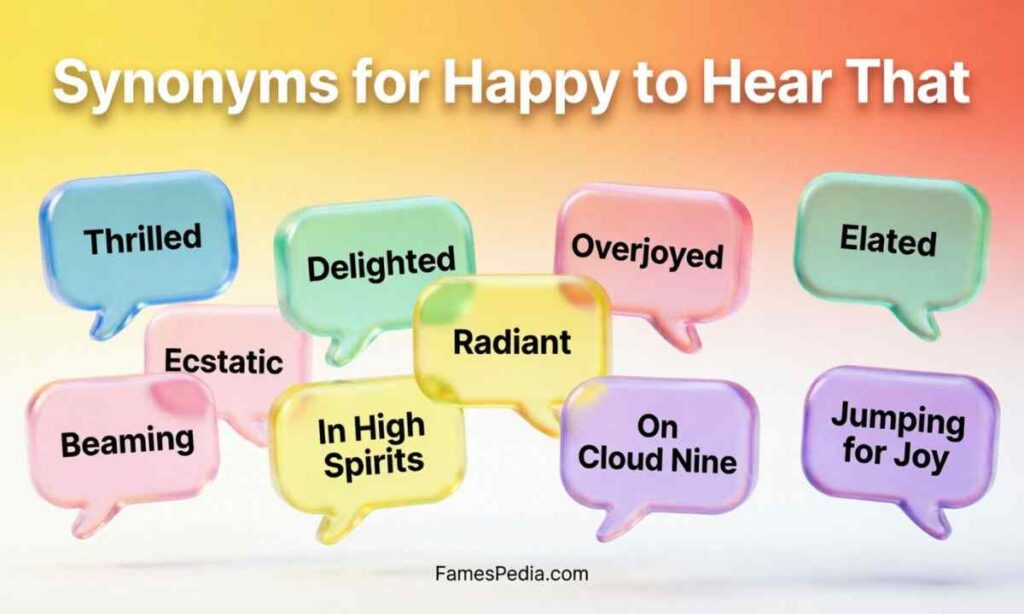
Below is a quick-reference table of all 31 alternatives, organized by tone, so you can quickly find the right phrase for your situation. Detailed examples for each follow after the table.
| # | Phrase | Best For | Tone |
| 1 | That’s Wonderful to Hear! | Personal or professional good news | Warm, enthusiastic |
| 2 | I’m So Glad to Hear That | Everyday conversations | Friendly, sincere |
| 3 | That’s Great News! | Work updates, announcements | Positive, professional |
| 4 | I’m Delighted to Hear That | Formal emails, client replies | Polished, warm |
| 5 | That’s Awesome! | Casual chats, texting | Energetic, casual |
| 6 | That Makes Me Happy | Close friends and family | Heartfelt, personal |
| 7 | I’m Thrilled to Hear That | Big achievements | Excited, genuine |
| 8 | That’s Fantastic! | General good news | Upbeat, casual |
| 9 | I’m Overjoyed to Hear That | Major life events | Deeply emotional |
| 10 | That’s Such Good News | Everyday replies | Simple, sincere |
| 11 | I’m Excited to Hear That | Plans, opportunities | Enthusiastic |
| 12 | That’s Excellent! | Workplace feedback | Professional, crisp |
| 13 | I’m Very Happy to Hear That | Formal or semi-formal replies | Sincere, respectful |
| 14 | That Brings Me Joy | Emotional or personal updates | Reflective, warm |
| 15 | I’m So Pleased to Hear That | Professional settings | Polished, formal |
| 16 | That’s Amazing! | Impressive achievements | Excited, casual |
| 17 | I’m Cheerful to Hear That | Light, everyday news | Friendly, upbeat |
| 18 | That’s Wonderful News | Milestones, celebrations | Warm, celebratory |
| 19 | I’m Truly Happy About That | Meaningful updates | Sincere, heartfelt |
| 20 | That’s Terrific! | Casual or workplace chats | Lively, positive |
| 21 | I’m Happy for You | Personal achievements | Supportive, personal |
| 22 | That’s Brilliant! | Impressive news, informal UK usage | Enthusiastic |
| 23 | I’m Glad to Know That | Informational updates | Calm, reassuring |
| 24 | That’s Really Nice to Hear | Kind gestures or small good news | Soft, appreciative |
| 25 | I’m Absolutely Happy About That | Strong positive news | Emphatic, genuine |
| 26 | That’s Fabulous! | Social settings, celebrations | Playful, expressive |
| 27 | I’m Joyful to Hear That | Deeply positive news | Heartfelt, reflective |
| 28 | That’s Heartwarming | Kind or touching stories | Emotional, gentle |
| 29 | I’m Excited About That | Future plans, opportunities | Enthusiastic |
| 30 | That’s Inspiring! | Motivational stories | Uplifting, admiring |
Now let’s look at each phrase in detail, along with examples showing exactly how and when to use them.
That’s Wonderful to Hear!
This phrase works almost anywhere. It’s warm enough for personal conversations and polished enough for professional replies, making it one of the most versatile alternatives on this list.
Example: “You got accepted into the program? That’s wonderful to hear! You’ve worked so hard for this.”
Best Use: Personal achievements, career updates, and general good news in both casual and semi-formal settings.
I’m So Glad to Hear That

A simple, sincere way to show relief or happiness, especially useful when someone shares news that resolves a worry or concern.
Example: “The surgery went well and you’re recovering fast? I’m so glad to hear that.”
Best Use: Situations involving health updates, resolved problems, or reassuring news.
That’s Great News!
Short, upbeat, and easy to use in almost any context, this phrase fits naturally into both texts and workplace conversations.
Example: “We closed the deal with the new client. That’s great news for the whole team.”
Best Use: Business updates, team wins, and quick casual replies.
I’m Delighted to Hear That
A more polished and formal option, ideal for professional emails or situations that call for a touch of elegance.
Example: “I’m delighted to hear that your presentation was well received by the board.”
Best Use: Formal emails, client communication, and workplace correspondence.
That’s Awesome!
Casual and full of energy, this phrase is perfect for friendly chats, texting, and social media replies.
Example: “You finally ran your first 10K? That’s awesome! You should be proud of yourself.”
Best Use: Casual conversations, texting friends, and informal social settings.
That Makes Me Happy
A personal, heartfelt response that shows the other person’s news has genuinely affected your mood, ideal for close relationships.
Example: “Seeing you smile again after everything you’ve been through really makes me happy.”
Best Use: Conversations with close friends and family members.
I’m Thrilled to Hear That

This phrase expresses strong excitement, going a step beyond simple happiness to show real enthusiasm about someone’s success.
Example: “You got the promotion? I’m thrilled to hear that, you’ve earned every bit of it.”
Best Use: Major achievements, promotions, or exciting personal milestones.
That’s Fantastic!
An easy, upbeat phrase that works well in both casual and lightly professional situations without sounding overly formal.
Example: “Your book is getting published next year? That’s fantastic! I can’t wait to read it.”
Best Use: General good news among friends, family, or casual colleagues.
I’m Overjoyed to Hear That
Reserved for genuinely big news, this phrase conveys deep emotional happiness and works best for life-changing updates.
Example: “You’re expecting a baby? I’m overjoyed to hear that, congratulations to you both.”
Best Use: Major life events like engagements, births, or long-awaited good news.
That’s Such Good News
A simple, sincere phrase that fits naturally into everyday conversation without feeling overly dramatic.
Example: “Your flight got rebooked without extra charges? That’s such good news.”
Best Use: Everyday updates, minor wins, and casual replies.
I’m Excited to Hear That

This phrase shows enthusiasm about what’s ahead, making it a great fit for news involving future plans or opportunities.
Example: “You’re moving to the city you’ve always wanted to live in? I’m excited to hear that.”
Best Use: Upcoming plans, new opportunities, and future-focused good news.
That’s Excellent!
Crisp, professional, and confident, this phrase is a strong choice for workplace feedback and performance-related updates.
Example: “Your sales numbers exceeded the target this quarter. That’s excellent!”
Best Use: Workplace achievements, performance reviews, and professional feedback.
I’m Very Happy to Hear That
A slightly more formal version of the original phrase, adding emphasis while still sounding respectful and sincere.
Example: “I’m very happy to hear that the project was approved without any revisions.”
Best Use: Semi-formal replies, workplace emails, and respectful professional exchanges.
That Brings Me Joy

A reflective, emotionally rich phrase that works well when someone’s news has a deeper personal meaning to you.
Example: “Knowing you found a job you actually love brings me joy.”
Best Use: Personal, emotional, or meaningful updates from people close to you.
I’m So Pleased to Hear That
A polite and formal way to express satisfaction, often used in professional settings where a certain level of decorum is expected.
Example: “I’m so pleased to hear that your team’s efforts on the campaign were well received.”
Best Use: Formal business settings, client updates, and professional correspondence.
That’s Amazing!
Energetic and expressive, this phrase is ideal for impressive achievements that genuinely surprise or impress you.
Example: “You taught yourself to code in six months? That’s amazing!”
Best Use: Impressive personal or professional accomplishments in casual settings.
I’m Cheerful to Hear That
A lighter, friendly phrase suited to everyday good news that doesn’t require a heavy emotional response.
Example: “The weather cleared up for your outdoor event? I’m cheerful to hear that.”
Best Use: Light, everyday conversations and small positive updates.
That’s Wonderful News
Warm and celebratory, this phrase works especially well for milestones and announcements shared with a group.
Example: “You and your partner are getting married next spring? That’s wonderful news!”
Best Use: Celebrations, milestones, and announcements shared among friends or colleagues.
I’m Truly Happy About That
Adding “truly” gives this phrase extra sincerity, making it a good choice when you want to emphasize that your happiness is genuine.
Example: “I’m truly happy about that. You deserve this recognition after everything you’ve put into the project.”
Best Use: Meaningful updates where you want to stress authenticity and depth of feeling.
That’s Terrific!

A lively, slightly old-fashioned but still popular phrase that works well in both casual chats and light workplace conversations.
Example: “You finished the marathon in under four hours? That’s terrific!”
Best Use: Casual conversations and informal workplace exchanges.
I’m Happy for You
Unlike the other phrases, this one shifts focus directly onto the other person, making it especially supportive and personal.
Example: “You finally got the apartment you wanted. I’m happy for you.”
Best Use: Personal achievements and milestones where you want to center the other person’s success.
That’s Brilliant!
Common in British and Irish English, this phrase adds enthusiasm and works well in informal conversations.
Example: “You got into your top choice university? That’s brilliant!”
Best Use: Informal conversations, especially in British or Irish English contexts.
I’m Glad to Know That
A calm, reassuring phrase best suited to informational updates rather than emotionally charged news.
Example: “I’m glad to know that the shipment arrived on time.”
Best Use: Informational updates, confirmations, and low-key good news.
That’s Really Nice to Hear
A soft, appreciative phrase that works well for kind gestures or smaller pieces of good news.
Example: “Your neighbor offered to help you move? That’s really nice to hear.”
Best Use: Small acts of kindness or minor good news that still deserves acknowledgment.
I’m Absolutely Happy About That

Adding “absolutely” gives this phrase extra emphasis, making it feel more emphatic and enthusiastic than the standard version.
Example: “You got full funding for your research? I’m absolutely happy about that.”
Best Use: Strong positive news that deserves an emphatic, energetic response.
That’s Fabulous!
Playful and expressive, this phrase fits well in social settings, celebrations, and lighthearted conversations.
Example: “Your outfit for the event turned out exactly how you wanted? That’s fabulous!”
Best Use: Social gatherings, celebrations, and casual, upbeat conversations.
I’m Joyful to Hear That
A heartfelt, slightly more literary phrase that works well when you want your response to sound thoughtful and reflective.
Example: “I’m joyful to hear that your family is finally all together again.”
Best Use: Deeply positive or emotionally significant news.
That’s Heartwarming
Best reserved for stories involving kindness, generosity, or emotional connection rather than simple achievements.
Example: “Strangers helped fund her medical bills within a day? That’s heartwarming.”
Best Use: Touching stories, acts of kindness, and emotionally moving news.
I’m Excited About That
Similar to “I’m excited to hear that,” but slightly more forward-looking, making it ideal for plans and upcoming opportunities.
Example: “You’re starting your new role next month? I’m excited about that.”
Best Use: Future plans, new opportunities, and upcoming events.
That’s Inspiring!

Best used when someone’s news reflects resilience, hard work, or personal growth, this phrase shows admiration as well as happiness.
Example: “You went back to school at 40 and graduated at the top of your class? That’s inspiring!”
Best Use: Motivational stories, personal growth, and achievements that required real effort.
How to Choose the Right Alternative
With so many options, it helps to think about two things before you respond: the relationship and the setting.
- Casual conversations with friends: Phrases like “That’s awesome!”, “That’s amazing!”, or “I’m thrilled to hear that” feel natural and energetic.
- Professional or workplace settings: Try “That’s excellent!”, “I’m so pleased to hear that”, or “I’m delighted to hear that” for a polished, respectful tone.
- Emotional or personal news: Reach for “That brings me joy”, “I’m overjoyed to hear that”, or “That’s heartwarming” to show deeper emotional connection.
- Everyday, low-key updates: Simple phrases like “That’s such good news” or “I’m glad to know that” keep things light without overdoing it.
The right phrase isn’t about picking the fanciest option. It’s about matching your words to the moment and to the person you’re talking to.
You May Also Like This: 35+ Other Ways to Say “Have a Great Weekend” (With Examples)
Conclusion
“Happy to hear that” will always be a reliable, polite response, but it doesn’t have to be your only one. With 31 alternatives to choose from, you can match your tone to the relationship, the setting, and the size of the news itself. Whether you’re texting a friend about their weekend win or replying to a client’s good news in a formal email, a well-chosen phrase makes your response feel more personal and genuine.
The next time someone shares good news with you, try swapping in one of these alternatives. Small changes in language can make a big difference in how connected and thoughtful your responses feel.

Arslan is the creator and author behind FamesPedia, a platform focused on grammar, writing skills, and English language learning. Passionate about clear communication and effective writing, Arslan shares practical grammar tips, easy-to-follow language guides, and educational content to help readers improve their English with confidence.